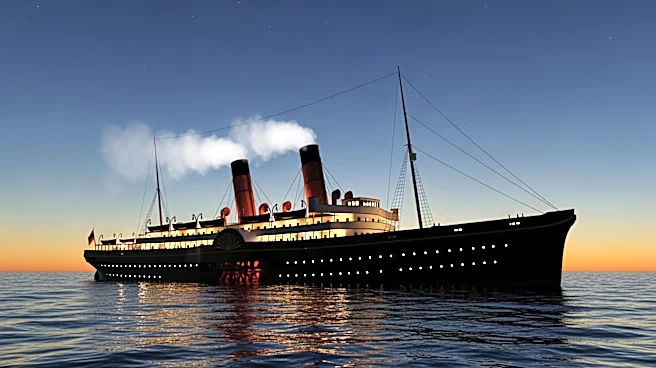







In 1838, the SS Sirius made history by becoming the first steamship to cross the Atlantic Ocean, marking a significant milestone in maritime travel. This wooden-hulled steamship, built in Scotland, was operated by the Saint George Steam Packet Company. Its journey from Cork, Ireland, to New York City was a remarkable achievement that paved the way for future transatlantic steam travel. The SS Sirius's voyage was not only a technical triumph but also
a symbol of the evolving capabilities of steam-powered vessels.
The Journey Begins
The SS Sirius embarked on its historic journey on April 4, 1838, departing from Cork, Ireland. The ship was chartered by the British and American Steam Navigation Company, which sought to establish a regular transatlantic passenger service. The Sirius was equipped with a two-cylinder steam engine that powered its paddle wheels, allowing it to maintain a steady speed across the ocean. Despite being overloaded with coal to ensure it could complete the journey, the Sirius managed to carry 45 passengers on this groundbreaking voyage.
The crossing took 18 days, 4 hours, and 22 minutes, with the Sirius maintaining an average speed of 8.03 knots. This was a significant improvement over the typical 40-day journey by sailing ships. The voyage was not without its challenges, as the ship's coal supply ran low, prompting the crew to burn resin barrels to conserve fuel. Despite these difficulties, the Sirius arrived in New York on April 22, 1838, a day ahead of its rival, the Great Western.
A Race Across the Atlantic
The SS Sirius's journey was part of a larger race to establish the first successful transatlantic steamship service. The Great Western, another steamship, departed from Avonmouth, England, four days after the Sirius. Although the Great Western was a larger and more powerful vessel, the Sirius's head start allowed it to reach New York first. This achievement earned the Sirius the unofficial title of the first Blue Riband holder, a distinction given to the fastest transatlantic crossing.
The competition between the Sirius and the Great Western highlighted the growing interest in steam-powered transatlantic travel. The success of these voyages demonstrated the potential for steamships to revolutionize long-distance travel, offering faster and more reliable service than traditional sailing ships.
Legacy of the SS Sirius
The SS Sirius's historic voyage had a lasting impact on maritime travel. Although the ship was too small to sustain regular transatlantic service, its successful crossing proved the viability of steam-powered ocean travel. The Sirius completed only one additional round trip before returning to its original route between Cork and Glasgow.
The voyage of the SS Sirius inspired further advancements in steamship technology and design. It paved the way for larger and more efficient vessels, such as the Great Western and later ships operated by the Cunard Line. The legacy of the SS Sirius lives on as a testament to the ingenuity and determination of early steamship pioneers, who transformed the way people traveled across the Atlantic.