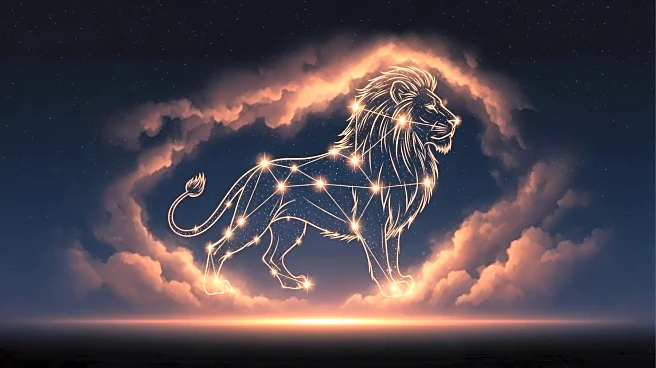




Leo, one of the most recognizable constellations in the night sky, holds a rich tapestry of mythological significance. Known as the Lion, Leo has been a symbol of strength and bravery across various cultures. Its origins can be traced back to ancient civilizations, where it was often associated with heroic tales and divine interventions. This article delves into the mythological stories and cultural importance of the Leo constellation, highlighting
its enduring legacy.
Ancient Greek Mythology
In ancient Greek mythology, Leo was identified as the Nemean Lion, a fearsome beast that terrorized the region of Nemea. The lion was said to be invulnerable to weapons, making it a formidable opponent for any warrior. The hero Heracles, known for his incredible strength and bravery, was tasked with defeating the Nemean Lion as part of his twelve labors. Heracles ultimately succeeded by using his bare hands to strangle the lion, a feat that demonstrated his unparalleled courage and strength.
The story of Heracles and the Nemean Lion was immortalized in the stars, with Zeus placing the lion in the sky as the constellation Leo. This mythological tale not only highlights the heroism of Heracles but also underscores the cultural significance of Leo as a symbol of bravery and power. The constellation served as a reminder of the hero's triumph and the divine favor bestowed upon him.
Babylonian and Persian Influence
The constellation Leo also held importance in Babylonian and Persian cultures. In Babylonian astronomy, Leo was known as UR.GU.LA, the "Great Lion," with its brightest star, Regulus, referred to as "the star that stands at the Lion's breast." This association with royalty and leadership was further emphasized by the star's regal name, Regulus, meaning "prince" or "little king."
Persians referred to Leo as Ser or Shir, both meaning "lion," and considered it a symbol of strength and majesty. The constellation's prominence in the night sky made it a powerful emblem of authority and divine protection. These cultural interpretations of Leo highlight the constellation's widespread influence and its role as a symbol of power across different civilizations.
Modern Cultural Impact
Today, the Leo constellation continues to captivate stargazers and astrology enthusiasts alike. In astrology, Leo is associated with the period between July 23 and August 22, representing traits such as leadership, confidence, and creativity. The constellation's mythological roots and cultural significance have contributed to its enduring popularity in modern times.
Leo's presence in the night sky serves as a reminder of the rich tapestry of stories and cultural meanings that have been woven around it. Whether viewed through the lens of ancient mythology or modern astrology, Leo remains a symbol of strength and bravery, inspiring awe and admiration in those who gaze upon its stars.