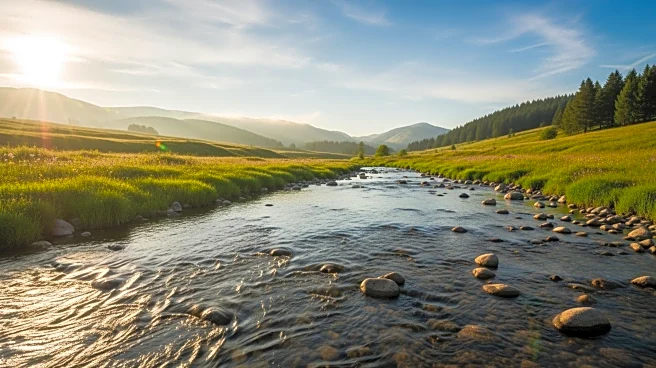




The Jarama River is a significant waterway in central Spain, flowing north to south and eventually joining the Tagus River near Aranjuez. This river plays a crucial role in the region's geography and environment, impacting both natural landscapes and human activities. As a tributary of the Tagus, the Jarama River contributes to the hydrological system that supports various ecosystems and communities in the Iberian Peninsula.
Geographical Features
The Jarama River originates
from the Sierra de Ayllón, specifically at Peña Cebollera, at an elevation of 2,119 meters. It travels a length of 194 kilometers before merging with the Tagus River. The river's basin covers an area of 5,047 square kilometers, making it a substantial component of the region's water system. The river's flow is characterized by an average discharge of 31.7 cubic meters per second, which supports the surrounding flora and fauna.
The river passes east of Madrid, where the El Atazar Dam is constructed on its tributary, the Lozoya River. This dam plays a vital role in water management and supply for the city of Madrid and its environs. The Manzanares River, another tributary, further enhances the Jarama's significance in the region's hydrology.
Environmental Impact
The Jarama River's ecosystem is diverse, supporting various plant and animal species. Its waters provide essential resources for agriculture and human consumption, making it a lifeline for communities along its banks. The river's health is crucial for maintaining the ecological balance in the area, influencing both terrestrial and aquatic life.
Human activities, such as agriculture and urban development, have impacted the river's natural state. Efforts to preserve and protect the Jarama's environment are essential to ensure its continued contribution to the region's biodiversity and sustainability.
Historical Significance
The Jarama River has been a witness to significant historical events, most notably the Battle of Jarama during the Spanish Civil War in 1937. This battle was a Nationalist attempt to break Republican lines, highlighting the strategic importance of the river in military operations. The river's proximity to Madrid made it a focal point in the conflict, with both sides vying for control over its banks.
The Jarama River's historical and geographical significance continues to be a subject of interest for historians and geographers alike. Its role in shaping the region's landscape and history underscores its importance as more than just a waterway, but as a vital component of Spain's natural and cultural heritage.