
Differential technology has undergone significant evolution since its inception, adapting to the changing needs of automotive engineering. Initially, differentials were simple mechanical devices designed
to allow wheels to rotate at different speeds, crucial for turning. Over time, advancements have led to more sophisticated systems, including limited-slip and electronic differentials, enhancing vehicle performance and safety. This article explores the historical development of differential technology and its impact on the automotive industry.
Early Developments in Differential Technology
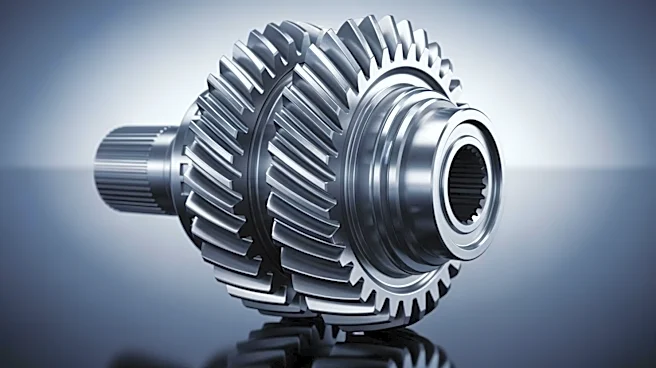
The concept of differentials dates back to the early days of mechanized vehicles, where the need for efficient power distribution became apparent. Early differentials were basic gear systems that allowed wheels to rotate at different speeds, facilitating turns without causing excessive tire wear or strain on the drivetrain.
As automotive technology advanced, so did the design of differentials. The introduction of limited-slip differentials marked a significant milestone, offering improved traction by limiting the speed difference between wheels. This innovation was particularly beneficial in high-performance and off-road vehicles, where maintaining grip is essential.
The Rise of Electronic Differentials
With the advent of electric vehicles, differential technology has seen further advancements. Electronic differentials have emerged as a modern solution, utilizing sensors and controllers to manage wheel speed and torque distribution. These systems offer precise control, allowing for better handling and performance.
Electronic differentials are particularly advantageous in multi-drive systems, where each wheel is powered by an individual motor. This setup allows for independent torque control, enhancing traction and stability. The ability to reprogram these systems also provides flexibility, enabling manufacturers to tailor performance characteristics to specific driving conditions.
Impact on Modern Automotive Design
The evolution of differential technology has had a profound impact on modern automotive design. By improving traction and handling, differentials contribute to the safety and efficiency of vehicles. This is especially important in high-performance cars, where precise control is crucial.
Moreover, the integration of electronic differentials in electric vehicles represents a shift towards more sustainable and efficient automotive solutions. These systems not only enhance performance but also reduce wear and tear on components, leading to longer vehicle lifespans. As differential technology continues to evolve, it remains a key area of focus in the pursuit of better automotive engineering.