
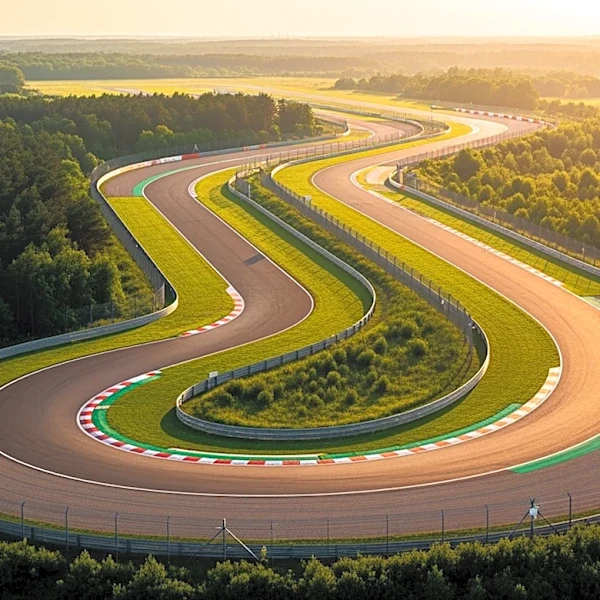

The Nürburgring Nordschleife is a legendary racing circuit that has witnessed numerous milestones and turning points in motorsport history. Known for its challenging layout and rich heritage, the Nordschleife has been the backdrop for many significant events that have shaped the world of racing. This article highlights some of the key moments in the history of the Nordschleife, showcasing its impact on the sport.
The Inauguration and Early Records
The Nürburgring Nordschleife was inaugurated
in 1927, marking the beginning of its storied history. The track's initial layout included both the Nordschleife and the Südschleife, with a combined length of 28.265 km. Early races on the circuit set the stage for future achievements, with drivers like Rudolf Caracciola establishing themselves as legends.
One of the first major milestones occurred in 1932 when Tazio Nuvolari broke the 11-minute barrier, showcasing the potential for speed on the Nordschleife. This achievement was followed by Bernd Rosemeyer's record-breaking lap in 1936, where he became the first driver to complete a lap in under 10 minutes. These early records highlighted the Nordschleife's status as a premier racing venue.
Post-War Resurgence and Technological Advancements
After World War II, the Nürburgring Nordschleife faced challenges due to damage and neglect. However, by 1951, major international racing returned to the track, marking a resurgence in its popularity. The circuit became known as "Green Hell," with its tall hedges and trees adding to its mystique.
The 1960s and 1970s saw significant technological advancements, with aerodynamic aids and improved car designs leading to faster lap times. In 1975, Niki Lauda became the first driver to break the seven-minute mark, setting a new standard for speed on the Nordschleife. These developments underscored the track's role in pushing the boundaries of automotive innovation.
Modern Era and Record-Breaking Achievements
The early 1980s marked a turning point for the Nürburgring Nordschleife, as the original start/finish loop was demolished to make way for a new Grand Prix track. This modern circuit opened in 1984, allowing the Nordschleife to host events independently or in combination with the new track.
In recent years, the Nordschleife has continued to be a venue for record-breaking achievements. In 2018, Timo Bernhard set a new lap record in the Porsche 919 EVO, completing a lap in 5:19.54. This milestone demonstrated the ongoing evolution of the Nordschleife and its significance in the world of motorsport.
The Nürburgring Nordschleife's history is marked by key milestones that have shaped the sport. From early records to modern achievements, the track remains a symbol of excellence and innovation, inspiring drivers and manufacturers to push the limits of what is possible.