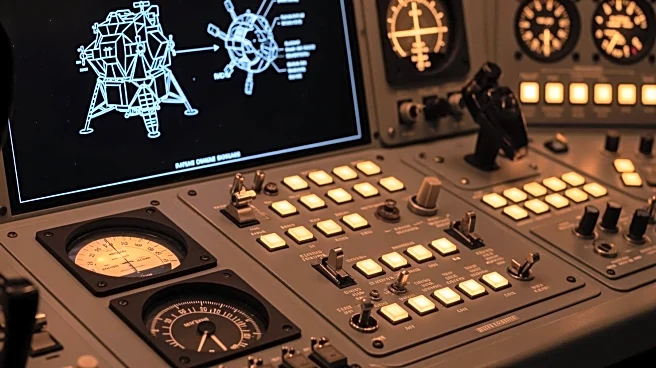




Apollo 15 was a groundbreaking mission that set new standards for lunar exploration. As the first of NASA's J missions, it emphasized scientific research and technological innovation. The mission introduced several advancements, including the Lunar Roving Vehicle and redesigned space suits, which allowed astronauts to conduct more extensive exploration and experiments on the Moon. This article delves into the scientific and technological aspects that made
Apollo 15 a pivotal mission in the history of space exploration.
The Lunar Roving Vehicle
One of the most significant technological advancements of Apollo 15 was the introduction of the Lunar Roving Vehicle (LRV). This electric vehicle was designed to transport astronauts and equipment across the lunar surface, greatly expanding the range of exploration. The LRV allowed astronauts David Scott and James Irwin to travel several kilometers from their landing site, enabling them to collect a diverse array of geological samples.
The LRV was a marvel of engineering, capable of navigating the Moon's rugged terrain. It featured four independently driven wheels, each powered by its own electric motor. The vehicle could reach speeds of up to 8 mph, allowing the astronauts to cover more ground in less time. The LRV's design also included a television camera, which provided live footage of the lunar surface to audiences back on Earth.
Redesigned Space Suits and Scientific Instruments
Apollo 15 also saw the introduction of redesigned space suits, known as the A7LB suits. These suits featured several improvements over previous designs, including a new waist joint that allowed astronauts to bend over and sit on the LRV. The suits also had upgraded life support systems, enabling longer-duration EVAs and more extensive exploration.
In addition to the LRV and space suits, Apollo 15 was equipped with a suite of scientific instruments designed to gather data on the Moon's environment. The Command Module Pilot, Alfred Worden, operated the scientific instrument module (SIM) bay, which housed a panoramic camera, a gamma-ray spectrometer, a mapping camera, a laser altimeter, and a mass spectrometer. These instruments collected valuable data on the Moon's composition and topography, contributing to our understanding of its geological history.
Scientific Discoveries and Legacy
The scientific achievements of Apollo 15 were numerous and significant. The mission's exploration of the Hadley Rille area provided valuable insights into the Moon's geological history. The collection of the Genesis Rock, a sample believed to be part of the Moon's primordial crust, was a highlight of the mission. This anorthosite sample offered clues about the early formation of the Moon and the processes that shaped its surface.
Apollo 15's technological advancements and scientific discoveries set the stage for future lunar exploration. The mission demonstrated the potential for extended stays on the Moon and the importance of scientific research in space missions. The data and samples collected during Apollo 15 continue to be studied by scientists, providing insights into the Moon's history and the broader history of the solar system.
Apollo 15 was a landmark mission that showcased the power of science and technology in space exploration. Its innovations and discoveries have had a lasting impact on our understanding of the Moon and our ability to explore other celestial bodies. As we look to the future of space exploration, the legacy of Apollo 15 serves as a reminder of the importance of scientific research and technological innovation in our quest to explore the universe.