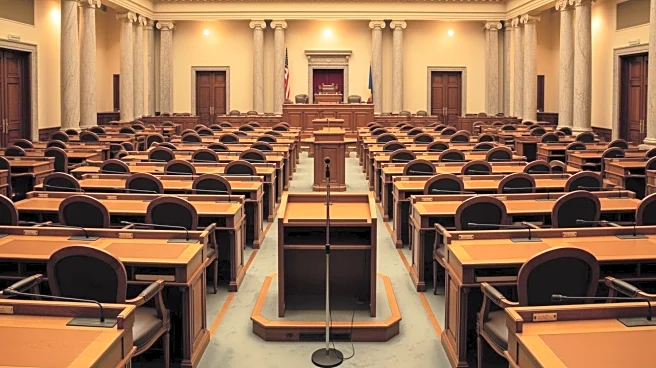




The United States House of Representatives, as the lower chamber of Congress, has undergone significant changes since its inception in 1789. This article explores the historical evolution of the House, highlighting key milestones and developments that have shaped its current form. From its early days under the Articles of Confederation to the modern legislative body we know today, the House has played a crucial role in American governance.
The Early Years
The origins
of the United States House of Representatives can be traced back to the Articles of Confederation, where Congress was a unicameral body with equal representation for each state. However, this structure proved inadequate, leading to the Constitutional Convention of 1787. The Virginia Plan proposed a bicameral legislature, which eventually led to the creation of the House of Representatives as part of the Great Compromise. This compromise established the House with representation based on population, while the Senate provided equal representation for each state.
In 1789, the House convened for the first time in New York City, marking the beginning of its legislative journey. The capital moved to Philadelphia in 1790 and finally settled in Washington, D.C., in 1800. During these early years, the House was often in conflict with the Senate over regionally divisive issues, such as slavery, which dominated the political landscape.
The 19th Century: Conflict and Change
The 19th century was a period of significant conflict and change for the House of Representatives. The North's larger population allowed it to dominate the House, while the South held equal power in the Senate. This imbalance led to intense debates over slavery, culminating in the Civil War. The House supported measures like the Wilmot Proviso, which aimed to ban slavery in newly acquired territories, but these were often blocked by the Senate.
Following the Civil War, the Reconstruction era saw the Republican Party hold large majorities in the House, reflecting the Union's victory and the abolition of slavery. The late 19th century also witnessed the rise of powerful speakers like Thomas Brackett Reed, who expanded the influence of the speaker's role, setting the stage for future legislative developments.
The 20th Century and Beyond
The 20th century brought further changes to the House of Representatives. The speakership reached its peak under Joseph Gurney Cannon, whose powers were later curtailed in the "Revolution of 1910." The Democratic Party dominated the House during Franklin D. Roosevelt's administration, and major reforms in the 1970s shifted power from committee chairs to party leaders.
In recent decades, the House has seen shifts in party control, with Republicans and Democrats alternating power. Notable events include the Republican Revolution of 1994 and the Democrats' strong performance in the 2018 midterm elections. Today, the House continues to play a vital role in shaping U.S. legislation and governance.