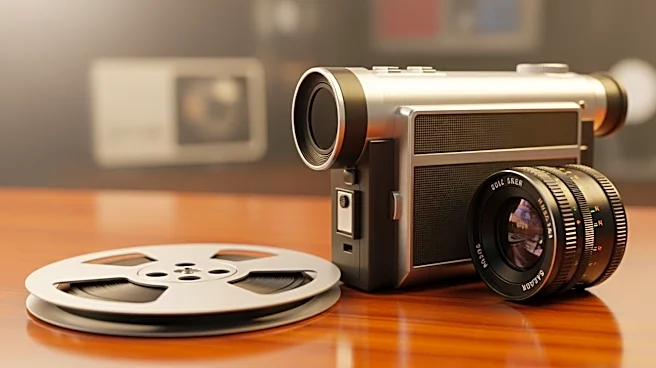









In the mid-1960s, the landscape of home entertainment was forever changed with the introduction of the CV-2000 by Sony. As one of the world's first home video tape recorders, the CV-2000 marked a significant milestone in consumer electronics. Released in August 1965, this device was a game-changer, allowing individuals to record television programs and home movies for the first time. This article delves into the development, features, and impact of the CV-2000,
highlighting its role in the evolution of home video recording.
The Birth of the CV-2000
The CV-2000 was developed by Sony engineer Nobutoshi Kihara, who was tasked with creating a consumer-friendly video tape recorder. The 'CV' in the model name stood for 'Consumer Video,' reflecting Sony's intention to bring video recording technology into the home. Prior to the CV-2000, video recording was primarily the domain of television studios and professionals, with equipment that was both bulky and expensive.
Sony's CV-2000 was revolutionary in that it was the first fully transistorized video cassette recorder (VCR), making it more compact and affordable than its predecessors. Weighing and costing only a tenth of other analog video recorders of the time, the CV-2000 made video recording accessible to a broader audience. It used ½-inch open reel magnetic tape and recorded in black and white, with a resolution of more than 220 TV lines.
Features and Functionality
The CV-2000's design was innovative for its time. It utilized a helical scan read and write mechanism, which was a significant advancement in video recording technology. This method allowed for more efficient use of tape and improved recording quality. The device recorded television programs using a skip field process, which halved the temporal and vertical resolution but was sufficient for the black and white recordings of the era.
One of the notable features of the CV-2000 was its manual threading system. Users had to manually thread the tape around the helical scan video head drum, a process that required some technical know-how. Despite this, the CV-2000 was marketed as a home movie recorder, and it found a niche market among businesses and educational institutions as well.
Impact and Legacy
The CV-2000's introduction marked the beginning of a new era in home entertainment. It paved the way for future developments in video recording technology, leading to more advanced systems like the Betamax and VHS. However, the CV-2000 had its limitations, such as the lack of tracking adjustment, which made tape interchangeability between different machines difficult.
Despite these challenges, the CV-2000's impact on the consumer electronics market was profound. It demonstrated the potential for home video recording and set the stage for the widespread adoption of VCRs in the decades that followed. The CV-2000 remains a significant milestone in the history of video technology, representing a time when the idea of recording television at home was just beginning to take shape.