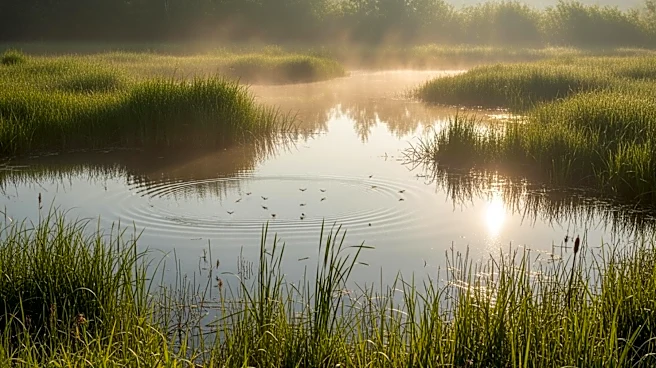

Laguna Seca, located in the south Santa Clara Valley of California, is a seasonal lake that plays a crucial role in the region's ecology. Known as the largest freshwater wetland in Santa Clara County,
it serves as a vital wildlife corridor connecting various mountain ranges. This article delves into the ecological significance of Laguna Seca, highlighting its role in supporting diverse species and its potential for restoration.
A Critical Wildlife Corridor
Laguna Seca is situated in the Coyote Valley, an area that acts as the narrowest corridor connecting Mt. Hamilton and the Diablo Range to the foothills of the Santa Cruz Mountains. This positioning makes it an essential passage for wildlife, facilitating movement and genetic exchange between populations. The lake is fed by Fisher Creek, which extends to Coyote Creek through a man-made channel. This connection underscores the importance of Laguna Seca in maintaining ecological balance and supporting biodiversity.
The wetlands formed by Laguna Seca are crucial for various species, including endangered amphibians like the California tiger salamander and the California red-legged frog. These species rely on the wetland's unique environment for breeding and survival. Additionally, Laguna Seca serves as a stopover for migrating waterfowl, providing them with necessary resources during their long journeys.
Geology and Hydrology
The geology of Laguna Seca contributes significantly to its ecological functions. The marshes and lagunas are formed as the bedrock of the Santa Teresa Hills forces groundwater to the surface, creating springs and seeps. The heavy clay soils, often referred to as "black adobe" soils, further facilitate the emergence of groundwater. This natural process helps recharge the aquifer in the Coyote Valley, ensuring a steady supply of water for the ecosystem.
Laguna Seca's hydrology also plays a role in flood management. The lake could provide major flooding protection to downstream areas like San Jose if the man-made extension of Fisher Creek to Coyote Creek were removed. Restoration projects aimed at spreading, capturing, and sinking excess stormwater could reduce flood risks while enhancing groundwater recharge.
Restoration Opportunities
The potential restoration of Laguna Seca offers a unique opportunity to revive natural wetland functions and support a diverse range of species. Successful restoration could bolster populations of rare plants, amphibians, and water birds, contributing to the overall health of the ecosystem. Moreover, restored wetlands would act as natural flood basins, moderating flood impacts on urban areas downstream.
Restoration efforts could transform Laguna Seca into a thriving habitat, enhancing its role as a wildlife corridor and a critical ecological asset. By focusing on hydrologic restoration and habitat enhancement, Laguna Seca could continue to support biodiversity and provide essential ecosystem services for generations to come.