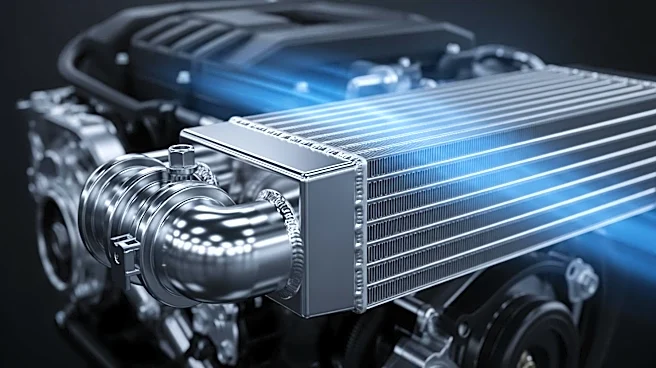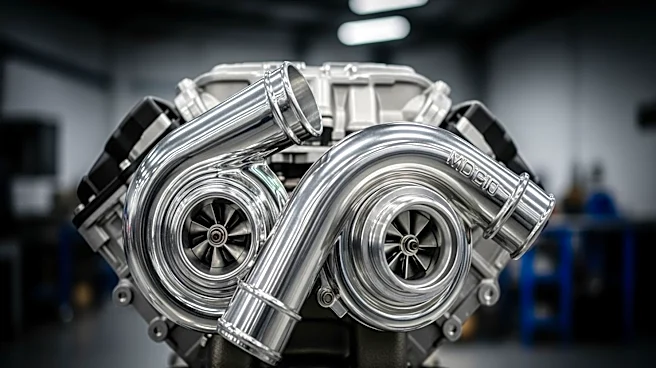



Twincharging, the combination of a supercharger and a turbocharger in a single engine system, has been a significant innovation in automotive engineering. This technology was developed to address the limitations of using either a supercharger or a turbocharger alone. Over the years, twincharging has evolved and found its place in various automotive applications, offering enhanced performance and efficiency.
Historical Development of Twincharging
The concept of twincharging was first introduced
by Lancia in 1985 with their Delta S4 Group B rally car. This vehicle was a pioneer in utilizing both a supercharger and a turbocharger to maximize engine performance. The Delta S4's engine was designed to provide immediate boost at low speeds through the supercharger, while the turbocharger took over at higher speeds for greater efficiency. This setup allowed the car to achieve impressive power outputs and responsiveness, setting a new standard in rally car performance.
Following Lancia's innovation, other manufacturers began exploring twincharging for their vehicles. Nissan, for instance, adapted the concept for their March Super Turbo, a production road car that benefited from the enhanced power delivery and efficiency of a twincharged engine. These early applications demonstrated the potential of twincharging to improve engine performance across a range of driving conditions.
Modern Applications and Benefits
Today, twincharging is utilized in various production vehicles, particularly those with small-displacement engines. Volkswagen's 1.4 TSI engine is a notable example, employing both a turbocharger and a supercharger to deliver a broad torque band and improved fuel economy. This engine has been used in numerous models within the VW Group, showcasing the versatility and effectiveness of twincharging in modern automotive design.
The benefits of twincharging are particularly evident in engines that require a wide operating rpm range. By providing a seamless transition from supercharger to turbocharger, these systems offer a lag-free power delivery that enhances the driving experience. This makes twincharging an attractive option for manufacturers looking to balance performance with efficiency.
Challenges and Future Prospects
Despite its advantages, twincharging presents certain challenges, including increased complexity and cost. The integration of two different types of compressors requires sophisticated control systems to manage the transition between supercharging and turbocharging. Additionally, the need for a lower compression ratio in some engines can negate some efficiency gains.
Looking ahead, the future of twincharging will likely involve further refinements in control systems and integration techniques. As automotive technology continues to advance, twincharging may become more prevalent in a wider range of vehicles, offering a compelling solution for achieving high performance and efficiency.