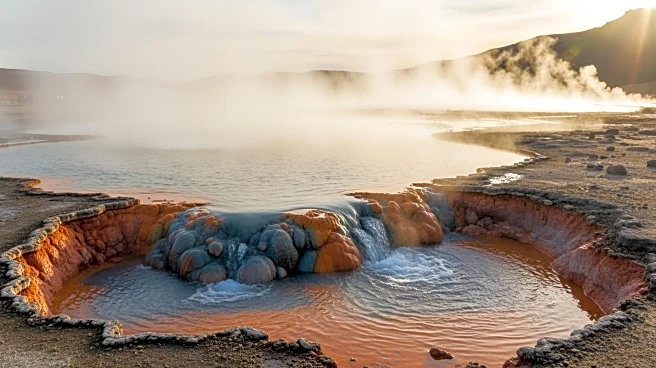




The Yellowstone Caldera is not only a geological wonder but also a hotspot of geothermal activity. Located in Yellowstone National Park, it boasts the greatest concentration of hydrothermal features in the world. From geysers to hot springs, the caldera's geothermal activity is fueled by the heat from its vast magma chamber, making it a unique and fascinating destination for visitors and scientists alike.
Geothermal Features
Yellowstone National Park is renowned for its
geothermal features, many of which are concentrated within the Yellowstone Caldera. The park is home to over half of the world's geysers, including the famous Old Faithful. These geysers are powered by the heat from the magma chamber beneath the caldera, which heats water and causes it to erupt in spectacular displays.
In addition to geysers, the park features numerous hot springs, fumaroles, and mudpots. These features are the result of water interacting with the hot rocks below the surface, creating a variety of unique and colorful formations. The geothermal activity at Yellowstone is a testament to the dynamic nature of the Earth's crust and the power of volcanic processes.
The Role of the Hotspot
The geothermal activity at Yellowstone is driven by the Yellowstone hotspot, a stationary area of intense heat in the Earth's mantle. As the North American Plate moves over this hotspot, magma rises towards the surface, providing the heat necessary for the park's geothermal features. This process is similar to the formation of the Hawaiian Islands, where the Pacific Plate moves over a hotspot.
The hotspot is responsible for the caldera's ongoing geothermal activity, which includes periodic uplift of the caldera floor. This uplift is caused by the movement of magma beneath the surface, which can lead to changes in the park's geothermal features. Scientists closely monitor these changes to better understand the dynamics of the hotspot and its impact on the caldera.
Scientific Research and Monitoring
The geothermal activity at Yellowstone is a subject of ongoing scientific research and monitoring. The Yellowstone Volcano Observatory uses a variety of tools to study the caldera's geothermal features, including seismic monitoring and ground deformation measurements. These efforts are essential for understanding the interactions between magma and the Earth's crust and predicting future activity.
Research at Yellowstone extends beyond monitoring. The park serves as a natural laboratory for studying geothermal processes and the dynamics of volcanic systems. This research contributes to our understanding of geothermal activity worldwide and helps improve hazard assessment and mitigation strategies.