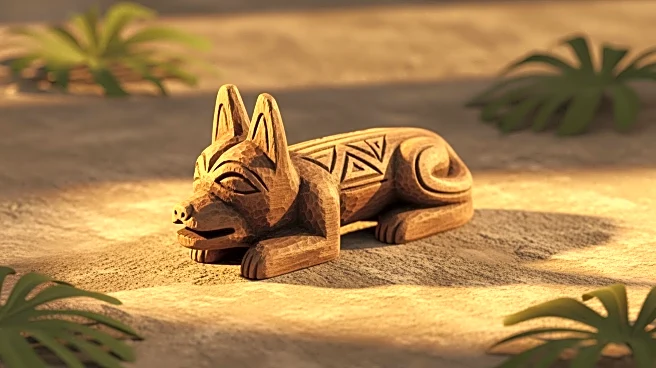

The Marquesan Dog, an extinct breed from the Marquesas Islands, offers a fascinating glimpse into the history of Polynesian migration and settlement. Introduced by the ancestors of the Polynesian people,
these dogs were more than just companions; they were integral to the cultural and spiritual life of the Marquesas. Despite their significance, the Marquesan Dog became extinct before European explorers arrived, leaving behind only archaeological traces and petroglyphs to tell their story.
Introduction of the Marquesan Dog
The Marquesan Dog was brought to the Marquesas Islands by Polynesian settlers during their migrations. These settlers also introduced other domesticated animals such as chickens, pigs, and the Polynesian rat. The dogs served various roles within the community, including being tribal totems and religious symbols. Unlike in other parts of Polynesia, where dogs were a more common food source, the Marquesan Dog was rarely consumed due to its scarcity.
The introduction of the Marquesan Dog is a testament to the complex migration patterns of the Polynesian people. As they traveled across the Pacific, they brought with them not only their culture and traditions but also their domesticated animals, which played crucial roles in their new environments. The Marquesan Dog, like other Polynesian dogs, was an important part of this cultural package.
Cultural Significance and Extinction
In the Marquesas, the dog held a special place in society. They were associated with high chiefs and priestly classes, indicating their elevated status. Petroglyphs and carved images of dogs found near religious centers and chiefly residential areas further underscore their cultural importance. These representations often depicted the dogs in exaggerated forms, suggesting a symbolic rather than realistic portrayal.
Despite their cultural significance, the Marquesan Dog became extinct before the arrival of Europeans. Spanish explorers who visited the islands in 1595 did not record any presence of these dogs, indicating their extinction occurred earlier. The scarcity of the dogs likely contributed to their extinction, as they were never numerous on the islands.
Archaeological Evidence and Legacy
The existence of the Marquesan Dog is primarily known through archaeological findings. Excavations have uncovered dog bones and burials, providing physical evidence of their presence. Petroglyphs depicting dogs have been found in various locations, including the valleys of 'A'akapa, Ha'atuatua, and Hatiheu on Nuku Hiva, and the me'ae Vaikivi on Ua Huka.
These archaeological findings offer valuable insights into the role of dogs in Marquesan society and their eventual disappearance. The Marquesan Dog's extinction serves as a reminder of the fragile nature of isolated ecosystems and the impact of human settlement on native species. Today, the legacy of the Marquesan Dog lives on through these archaeological remnants, offering a window into the past and the rich cultural tapestry of the Marquesas Islands.