

Sequential gearboxes have revolutionized the world of racing, offering faster shift times and improved performance. Initially used in motorcycles, these gearboxes have become a staple in high-performance racing cars. This article explores the historical development of sequential gearboxes, highlighting key milestones and their impact on racing.
Early Developments
The journey of sequential gearboxes in racing began with the Porsche Type 360 Cisitalia in 1946. This marked
the first use of a proper sequential manual gearbox in a racecar. However, it was the Queerbox design, pioneered by Richard Ansdale and Harry Mundy, that gained notoriety in the late 1950s and early 1960s. Used in various Lotus Grand Prix racecars, starting with the 1958 Lotus 12, the Queerbox was technically the first proper "sequential" gearbox used in a racecar.
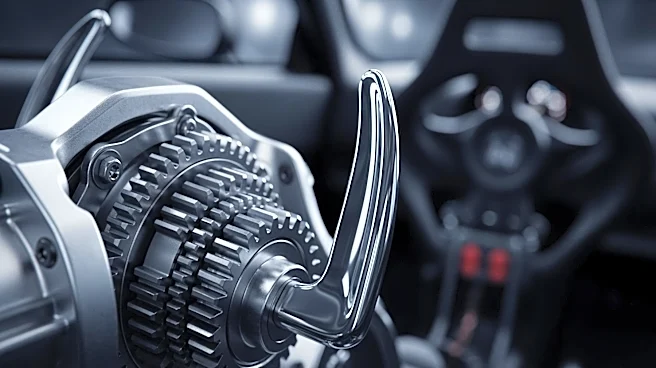
Despite its innovative design, the Queerbox was infamously unreliable. Nonetheless, it laid the groundwork for future developments in sequential gearboxes. The concept of a sequential shift lever, with a mechanical linkage or electronic paddle-shifters, began to replace the traditional H-pattern stick shift in racing cars.
Modern Advancements
The 1990s saw significant advancements in sequential gearbox technology. The first modern sequential manual gearbox with a manual shift lever was introduced in the 1990 Peugeot 905 Group C sports car. This innovation was quickly followed by its adoption in the Ferrari 333 SP LMP racecar and CART Champ Cars/Indycars in the mid-1990s.
By the late 1990s, sequential gearboxes had become a standard feature in many high-performance racing vehicles. Notable examples include the McLaren F1 GTR, Mercedes-Benz CLK GTR, Porsche 911 GT1, and Panoz Esperante GTR-1 GT1 racecars. The technology also made its way into WRC Rally cars and Le Mans Prototype racecars, further cementing its place in the racing world.
Impact on Racing
The introduction of sequential gearboxes has had a profound impact on racing. By allowing drivers to change gears more quickly and efficiently, these gearboxes have contributed to faster lap times and improved overall performance. The use of dog clutches instead of synchromesh has resulted in shorter shift times, often less than 5 milliseconds, making them ideal for high-speed racing.
Today, sequential gearboxes are a common feature in Formula 1 cars, where every millisecond counts. Their ability to provide seamless gear changes without the need for a clutch pedal has made them indispensable in the pursuit of speed and precision on the track. As technology continues to evolve, sequential gearboxes remain at the forefront of racing innovation, driving the sport to new heights.