






Sleds have played a pivotal role in exploration and adventure, serving as essential tools for traversing challenging terrains. From early Arctic expeditions to modern-day adventures, sleds have enabled explorers to reach remote and inhospitable regions. This article examines the role of sleds in exploration and adventure, highlighting their significance in both historical and contemporary contexts.
Early Arctic and Antarctic Expeditions
In the 19th and early 20th centuries, sleds were crucial
for Arctic and Antarctic explorations. Man-hauled sledges and dog sleds were the primary means of transport for explorers venturing into these frozen landscapes. British expeditions, such as those led by Captain Scott, relied on man-hauled sledges, while others, like Roald Amundsen's team, used dog sleds to great success.
Amundsen's expedition to the South Pole in 1911 is a notable example of the effectiveness of sled dogs in exploration. His team of sled dogs allowed them to cover vast distances quickly and efficiently, ultimately reaching the pole ahead of their rivals. This success underscored the importance of sleds and sled dogs in polar exploration, setting a precedent for future expeditions.
Modern Scientific Expeditions
Today, sleds continue to play a vital role in scientific expeditions to polar regions. Modern sleds, such as the WindSled, are kite-powered and used in scientific research in Antarctica and Greenland. These sleds enable researchers to transport equipment and supplies across the ice, facilitating studies on climate change, glaciology, and other critical topics.
The use of sleds in modern expeditions highlights their adaptability and enduring relevance. Despite advancements in technology, sleds remain a practical and efficient means of transport in challenging environments, allowing scientists to conduct research in some of the most remote areas on Earth.
Adventure and Recreation
Beyond scientific exploration, sleds have become central to adventure and recreational activities. Dog sledding tours and expeditions offer adventurers the opportunity to experience the thrill of traversing snowy landscapes, much like the explorers of the past. These tours often take place in regions like Alaska, Canada, and Scandinavia, where the tradition of dog sledding remains strong.
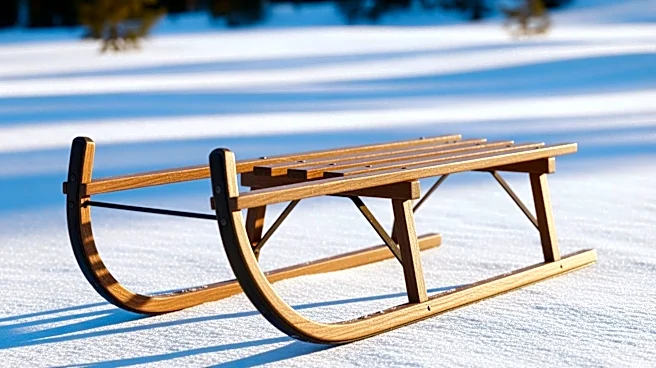
In addition to dog sledding, recreational sledding has become a popular winter activity. Sledding hills across snowy regions attract people of all ages, eager to experience the excitement of sliding down slopes. This recreational use of sleds reflects their evolution from essential tools of exploration to sources of enjoyment and adventure.
Sleds have been integral to exploration and adventure throughout history, enabling humans to reach and study remote regions. From early polar expeditions to modern scientific research and recreational activities, sleds continue to play a significant role in our understanding and enjoyment of the natural world.