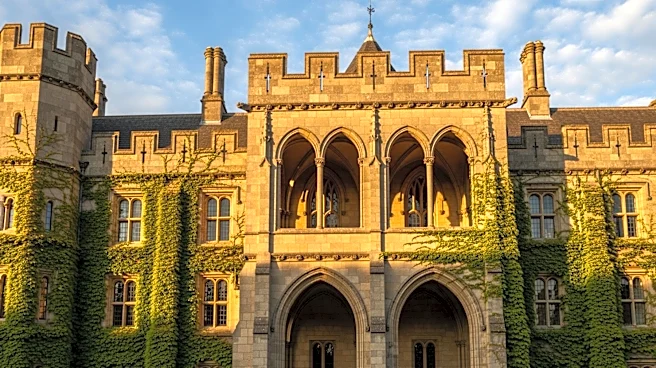





The Smithsonian Institution Building, affectionately known as the Castle, is a landmark of historical significance on the National Mall in Washington, D.C. Since its completion in 1855, the Castle has been at the heart of the Smithsonian Institution's operations. This article traces the historical timeline of the Castle, highlighting key events and renovations that have shaped its journey from inception to the present day.
Early Years and Construction
The story of the Smithsonian
Castle began in 1846 when a nationwide design competition was held to select the architect for the Smithsonian's first museum building. James Renwick Jr.'s Gothic Revival design was chosen unanimously, and construction commenced in 1847. The East Wing was completed in 1849, providing a residence for Secretary Joseph Henry and his family, while the West Wing followed later that year.
Despite a structural collapse in 1850, which raised concerns about workmanship, the Castle's exterior was completed in 1852. Renwick withdrew from further participation, and general contractor Gilbert Cameron continued the interior work, finishing in 1855. The Castle was initially intended to be built in white marble, then yellow sandstone, but ultimately, Seneca red sandstone was chosen for its cost-effectiveness and durability.
Fires and Renovations
The Smithsonian Castle faced a significant setback in 1865 when a fire caused extensive damage to the upper floor, destroying valuable documents and artworks. Local architect Adolf Cluss undertook the renovation from 1865 to 1867, implementing further fireproofing measures. Additional renovations occurred in 1883, including the addition of third and fourth floors to the East Wing and a third floor to the West Wing.
In the 20th century, the Castle underwent modernization efforts, including the installation of electric lighting in 1895 and the replacement of the Great Hall's wooden floor with terrazzo around 1900. A tunnel was constructed to connect the Castle to the Arts and Industries Building, and a general renovation took place from 1968 to 1970, updating electrical systems, elevators, and HVAC systems.
Recent Developments and Future Plans
The Enid A. Haupt Garden was dedicated in 1987, enhancing the Castle's surroundings with a beautiful landscape. In February 2023, the Castle closed for a planned five-year renovation, aiming to restore many aspects of the building and remove an upper floor of offices to return the Grand Hall to its original appearance.
Throughout its history, the Smithsonian Castle has served as the administrative center of the Smithsonian Institution, housing its offices and visitor center. The Castle's design allows for expansion, reflecting its informal medieval-inspired architecture that accommodates asymmetrical development. As the Smithsonian continues to evolve, the Castle remains a symbol of the institution's commitment to preserving and promoting knowledge.