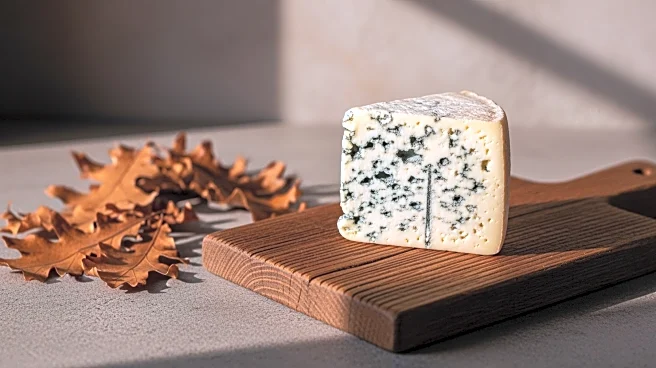




Roquefort cheese, a renowned blue cheese from southern France, boasts a rich history that spans centuries. Known for its distinctive flavor and texture, Roquefort has been a staple in French cuisine and culture. This article delves into the historical development of Roquefort cheese, tracing its origins and evolution over time.
Ancient Beginnings
The story of Roquefort cheese begins with a legend. According to folklore, a young shepherd abandoned his lunch of bread and ewes'
milk cheese in a cave to pursue a beautiful girl. Upon returning months later, he discovered that the mold Penicillium roqueforti had transformed his cheese into what we now know as Roquefort. This tale highlights the serendipitous nature of Roquefort's creation.
Historical records suggest that Roquefort cheese has been appreciated since ancient times. In 79 AD, Pliny the Elder praised the cheeses of Lozère and Gévaudan, which some believe to be early versions of Roquefort. Although there is debate over whether Pliny was referring to blue cheese, the connection to Roquefort has been widely accepted.
Middle Ages and Recognition
By the Middle Ages, Roquefort had gained recognition as a distinct cheese. On June 4, 1411, Charles VI granted a monopoly for the ripening of Roquefort cheese to the people of Roquefort-sur-Soulzon, acknowledging their long-standing tradition. This royal endorsement solidified Roquefort's status and ensured its continued production.
The cheese's popularity grew steadily, and by 1820, Roquefort was producing 300 tonnes annually. This figure increased significantly over the next century, reaching 9,250 tonnes by 1914. The expansion of Roquefort production reflects its growing demand and importance in French culinary culture.
Modern Developments
In 1925, Roquefort became the first cheese to receive France's Appellation d'Origine Contrôlée (AOC), a designation that regulates its production and naming. This recognition marked a significant milestone in Roquefort's history, ensuring the preservation of its traditional methods.
A landmark ruling in 1961 further protected Roquefort's authenticity. The Tribunal de Grande Instance at Millau decreed that only cheeses ripened in the natural caves of Mont Combalou in Roquefort-sur-Soulzon could bear the name Roquefort. This decision safeguarded the cheese's unique characteristics and prevented imitation.
Today, Roquefort remains a beloved cheese, celebrated for its rich history and distinctive flavor. Its journey from ancient legend to modern delicacy underscores the enduring appeal of this iconic French cheese.