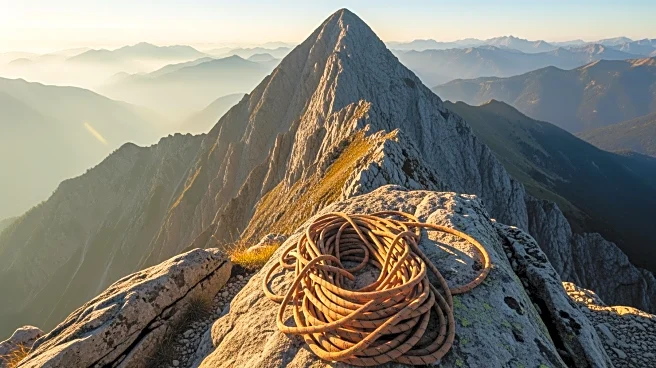




Mountaineering, the art of climbing mountains, has a rich history that spans centuries. From its early beginnings as a practical necessity to its current status as a popular sport, mountaineering has evolved significantly. This article explores the historical development of mountaineering, highlighting key milestones and changes in attitudes towards this challenging activity.
Early Beginnings and Practical Climbing
Mountaineering has roots that stretch back to prehistoric times. Early humans
often found themselves in mountainous regions, not for sport, but out of necessity. The remains of Ötzi, a man from the 4th millennium BC, were discovered in the Ötztal Alps, indicating that humans have been present in mountainous areas for thousands of years. In these early times, climbing mountains was often associated with economic, political, or religious purposes rather than recreation.
One of the earliest recorded ascents was the 1492 climb of Mont Aiguille by Antoine de Ville, a French military officer. This climb, which involved the use of ropes, ladders, and iron hooks, is widely recognized as the birth of mountaineering as a technical pursuit. It marked a shift from climbing for practical reasons to climbing for the challenge and adventure it presented.
The Golden Age of Alpinism
The Age of Enlightenment and the Romantic era brought a change in attitudes towards mountains. High peaks, once seen as obstacles or places of danger, began to be appreciated for their beauty and the challenge they presented. This period saw the first successful ascent of Mont Blanc in 1786 by Jacques Balmat and Michel-Gabriel Paccard, an event often considered the symbolic birth of modern mountaineering.
The 19th century, known as the Golden Age of Alpinism, saw many of the Alps' major peaks climbed for the first time. This era was characterized by a spirit of exploration and adventure, with climbers seeking to conquer the highest and most challenging peaks. The establishment of the Alpine Club in 1857 further formalized the sport, providing a community and resources for climbers.
Modern Mountaineering
Today, mountaineering is a global sport with a diverse range of activities, from traditional climbing to ski mountaineering. The development of new techniques and equipment has made it possible to climb peaks that were once considered inaccessible. The sport has also become more inclusive, with climbers from all over the world participating in expeditions.
Despite its evolution, the core of mountaineering remains the same: the pursuit of personal challenge and the experience of nature's grandeur. As climbers continue to push the boundaries of what is possible, mountaineering remains a testament to human curiosity and resilience.