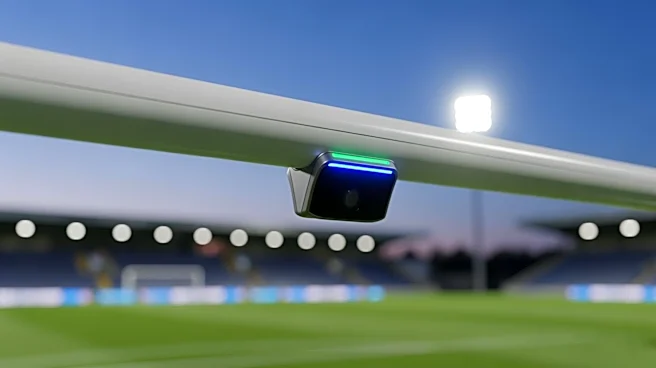







Goal-line technology (GLT) has become an essential tool in modern football, providing referees with the ability to accurately determine whether a goal has been scored. This technology relies on sophisticated systems that ensure precision and reliability. In this article, we delve into the technical workings of GLT and how it assists referees in making crucial decisions on the field.
The Mechanics of Goal-Line Technology
Goal-line technology systems are designed to detect when the entire
ball has crossed the goal line, nestled between the goalposts and beneath the crossbar. The primary objective of GLT is to support referees in their decision-making process, not to replace them. The technology must provide a clear and immediate indication of a goal, which is then communicated to the referee.
There are several systems approved for use in professional football, including Hawk-Eye and GoalRef. Hawk-Eye, for instance, uses multiple high-speed cameras positioned around the stadium to track the ball's trajectory. These cameras capture images from different angles, and the system triangulates the data to create a three-dimensional representation of the ball's path. This allows the system to determine with high accuracy whether the ball has crossed the line.
Communication with Referees
One of the critical requirements for goal-line technology is that it must communicate its findings solely to the match officials. This is achieved through a combination of visual signals and vibrations sent to a watch worn by the referee. The system must confirm a goal within one second of the incident, ensuring that the game can continue with minimal disruption.
The accuracy of these systems is paramount, as even the smallest error can lead to significant consequences in a match. Therefore, each GLT installation undergoes rigorous testing to ensure it meets the standards set by FIFA. Before each game, referees are required to test the system to confirm its functionality.
The Impact of Goal-Line Technology
Since its introduction, goal-line technology has had a profound impact on football. It has significantly reduced the number of controversial goal-line decisions, providing clarity and fairness in crucial moments. The technology is now a staple in major competitions, including the FIFA World Cup and top European domestic leagues.
While the cost of implementing GLT systems remains a barrier for some leagues, the technology's benefits in ensuring accurate and fair outcomes are undeniable. As football continues to embrace technological advancements, goal-line technology stands as a testament to the sport's commitment to integrity and fair play.