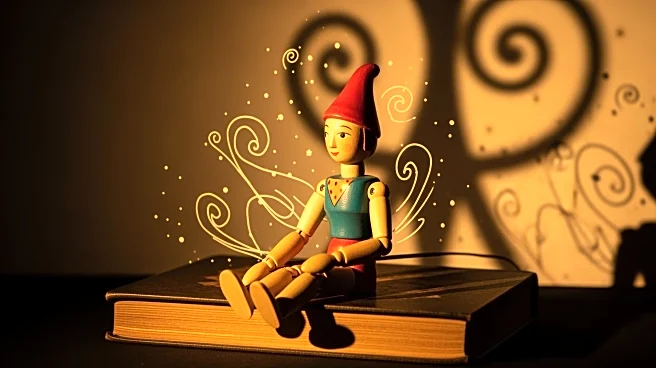



The story of Peter Pan has undergone significant transformations since its inception as a play by J.M. Barrie in 1904. Over the years, the tale of the boy who wouldn't grow up has been adapted into various forms, with Disney's 1953 animated film being one of the most iconic. This article explores the evolution of Peter Pan, examining how the story has changed from stage to screen and the impact of these adaptations.
J.M. Barrie's Original Vision
J.M. Barrie's play, Peter Pan, or
The Boy Who Wouldn't Grow Up, debuted in 1904 and quickly captured the imagination of audiences. The play introduced the world to Peter Pan, a mischievous boy who lives in the magical world of Neverland, where he leads the Lost Boys and battles the villainous Captain Hook. Barrie's work was notable for its whimsical storytelling and exploration of themes such as childhood innocence and the desire to escape the responsibilities of adulthood.
The play's success led to its adaptation into a novel, Peter and Wendy, in 1911. This version expanded on the characters and themes introduced in the play, solidifying Peter Pan's place in literary history. Barrie's work laid the foundation for future adaptations, each bringing its own interpretation to the timeless tale.
Disney's Animated Adaptation
Walt Disney's interest in adapting Peter Pan began in the 1930s, but it wasn't until 1953 that the animated film was released. Disney's version of Peter Pan retained the core elements of Barrie's story while introducing new characters and plotlines. The film's vibrant animation and memorable music brought the world of Neverland to life, captivating audiences and establishing Peter Pan as a Disney classic.
One of the most significant changes in Disney's adaptation was the portrayal of Tinker Bell. In Barrie's play, Tinker Bell was a small, glowing light, but Disney transformed her into a fully realized character with a distinct personality. This decision not only added depth to the story but also contributed to Tinker Bell's enduring popularity as a Disney icon.
Impact and Legacy
The success of Disney's Peter Pan has had a lasting impact on the story's legacy. The film's portrayal of Neverland and its characters has become the definitive version for many audiences, influencing subsequent adaptations and interpretations. Disney's Peter Pan has inspired numerous spin-offs, sequels, and merchandise, further cementing its place in popular culture.
While the film has faced criticism for its portrayal of certain characters, its influence on the Peter Pan narrative is undeniable. The story's themes of adventure, imagination, and the refusal to grow up continue to resonate with audiences, ensuring that Peter Pan remains a beloved and enduring tale. As new adaptations emerge, the evolution of Peter Pan serves as a testament to the story's timeless appeal and its ability to adapt to changing cultural landscapes.