


Apollo 9 was a groundbreaking mission that played a crucial role in the development of NASA's Apollo program. Conducted in March 1969, the mission was instrumental in testing the Lunar Module (LM) and perfecting docking maneuvers and spacewalks. This article explores the key aspects of Apollo 9's spacewalks and docking maneuvers, highlighting their significance in the journey to the Moon.
The Importance of Docking Maneuvers
Docking maneuvers were a critical component of the Apollo 9
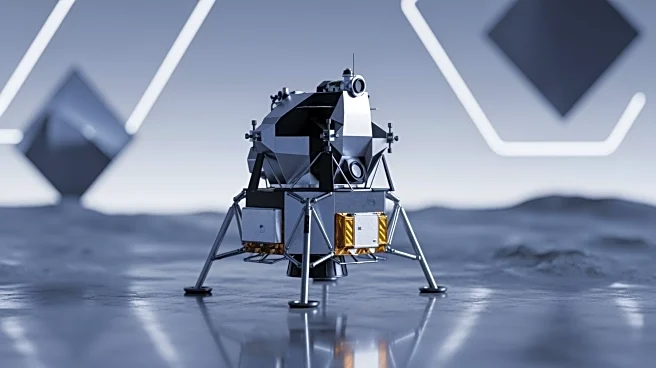
mission, as they were essential for the success of future lunar landings. The mission marked the first time that two crewed spacecraft docked in space, a significant achievement in the history of space exploration. The crew, consisting of Commander James McDivitt, Command Module Pilot David Scott, and Lunar Module Pilot Rusty Schweickart, successfully performed the first docking and extraction of the LM, named Spider.
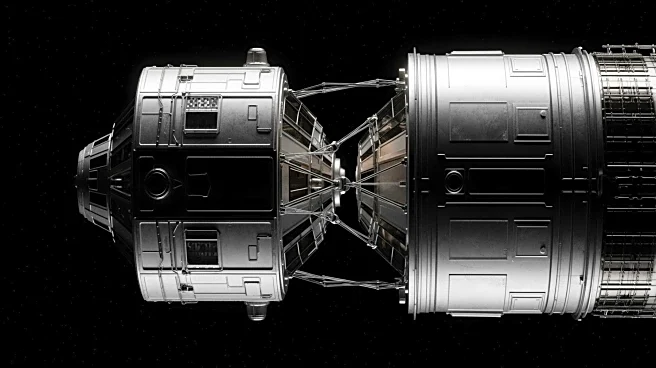
The docking maneuvers were designed to test the LM's ability to operate independently and rendezvous with the Command and Service Module (CSM), named Gumdrop. These tests were crucial in ensuring that the LM could safely transport astronauts to and from the lunar surface. The successful completion of these maneuvers demonstrated the feasibility of the lunar orbit rendezvous technique, a key element of the Apollo program.
Spacewalks and the Portable Life Support System
Apollo 9 also featured a significant spacewalk, or extravehicular activity (EVA), conducted by Lunar Module Pilot Rusty Schweickart. The EVA was a critical test of the Portable Life Support System (PLSS), which would be used by astronauts during lunar surface explorations. Schweickart's spacewalk was essential in verifying the functionality of the life support system, ensuring that astronauts could safely explore the Moon.
During the EVA, Schweickart tested the PLSS by moving along the exterior of the spacecraft, demonstrating its effectiveness in providing life support in the vacuum of space. The successful spacewalk was a major milestone in the Apollo program, proving that astronauts could safely conduct activities outside the spacecraft.
Legacy of Apollo 9's Achievements
The achievements of Apollo 9 in docking maneuvers and spacewalks were instrumental in advancing the Apollo program. The mission's success paved the way for Apollo 10's dress rehearsal and the historic Apollo 11 lunar landing. By demonstrating the effectiveness of the LM and the feasibility of spacewalks, Apollo 9 brought humanity one step closer to landing on the Moon.
Apollo 9's legacy continues to inspire future generations of space explorers, showcasing the power of human ingenuity and determination. The mission's pioneering achievements in docking maneuvers and spacewalks remain a testament to the spirit of exploration and the pursuit of knowledge.