





The nickel, a staple of American currency, has undergone significant transformations since its introduction in 1866. Originally created to replace the silver half dime, the nickel has seen various design changes reflecting different eras and artistic preferences. This article explores the historical development of the nickel, highlighting key design changes from the Shield nickel to the Jefferson nickel.
The Birth of the Nickel
The nickel was born out of necessity during
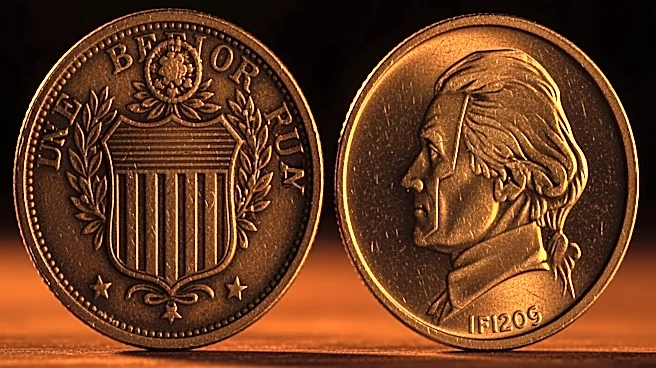
the economic turmoil of the American Civil War. With precious metal coins hoarded, Congress authorized a five-cent piece made of base metals in 1866. The initial design, known as the Shield nickel, featured a shield on the obverse and a numeral 5 surrounded by stars and rays on the reverse. However, the design faced criticism for its aesthetic appeal and production difficulties, leading to the removal of the rays in 1867.
Industrialist Joseph Wharton, who had a monopoly on nickel mining, played a significant role in promoting the use of nickel in coinage. His influence in Congress ensured the passage of legislation favoring nickel coins, despite the Mint's initial resistance due to the metal's hardness and the damage it caused to equipment.
Design Changes and Challenges
The Shield nickel was eventually replaced by the Liberty Head nickel in 1883, which introduced a new design featuring the head of Liberty. This design change was partly driven by the need to improve the aesthetic appeal and production efficiency of the coin. The Liberty Head nickel, also known as the "V" nickel due to the Roman numeral on its reverse, was struck until 1913.
The Buffalo nickel, introduced in 1913, marked another significant design shift. Featuring a Native American on the obverse and a buffalo on the reverse, this design was praised for its distinctly American themes. However, it faced production challenges, with dies breaking frequently due to the intricate design.
The Jefferson Nickel Era
In 1938, the Jefferson nickel was introduced, replacing the Buffalo nickel. Designed by Felix Schlag, the Jefferson nickel featured a portrait of Thomas Jefferson on the obverse and his home, Monticello, on the reverse. This design remained largely unchanged until 2004, when commemorative designs were issued to honor the Lewis and Clark Expedition.
The Jefferson nickel has continued to evolve, with changes in its composition during World War II due to nickel's strategic importance. Today, the nickel remains a vital part of U.S. currency, reflecting both historical significance and modern design sensibilities.