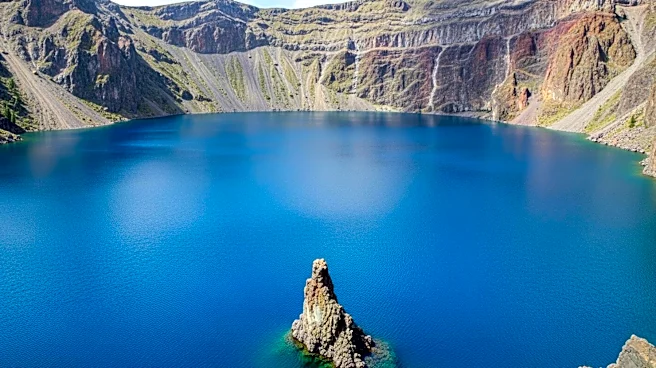






Crater Lake National Park in Oregon is a geological marvel, showcasing the remnants of a massive volcanic eruption that occurred thousands of years ago. The park is centered around Crater Lake, the deepest lake in the United States, formed by the collapse of Mount Mazama. This article delves into the fascinating geological history and features of this unique national park.
Formation of Crater Lake
Crater Lake was formed approximately 7,700 years ago following the collapse
of Mount Mazama, a volcano that was part of the Cascade Range. The eruption was so powerful that it led to the subsidence of the mountain, creating a caldera that eventually filled with water, forming the lake we see today. The caldera is nearly symmetrical and reaches depths of 4,000 feet, contributing to the lake's impressive average depth.
The eruption of Mount Mazama was a significant geological event, depositing ash as far as Yellowstone National Park and central Nevada. The ash has since developed into a soil type known as andisol, which is prevalent in the park. The park's soils are characterized by their sandy loam texture and slightly acidic nature, which affects the drainage and vegetation.
Volcanic Features and Activity
Crater Lake National Park is home to several volcanic features, including Wizard Island, a cinder cone that rises above the lake's surface. The park also contains numerous cinder cones and volcanic vents, some of which are still visible today. These features are a testament to the park's volcanic past and the ongoing geological processes that shape the landscape.
The park's geology is influenced by the subduction of the Juan de Fuca Plate beneath the North American Plate, which generates heat and compression, leading to volcanic activity. Although Mount Mazama is currently dormant, hydrothermal activity along the lake floor suggests that future eruptions are possible.
The Pinnacles and Pumice Desert
Among the park's unique geological formations are The Pinnacles, tall spires formed by the cementation of ash and pumice. These formations were created when hot gas moved through the deposits, cementing them together before erosion removed the surrounding material.
The Pumice Desert is another notable feature, consisting of a thick layer of pumice and ash that remains largely devoid of vegetation due to its porosity and poor soil quality. These areas highlight the park's dynamic geological history and the ongoing processes that continue to shape its landscape.