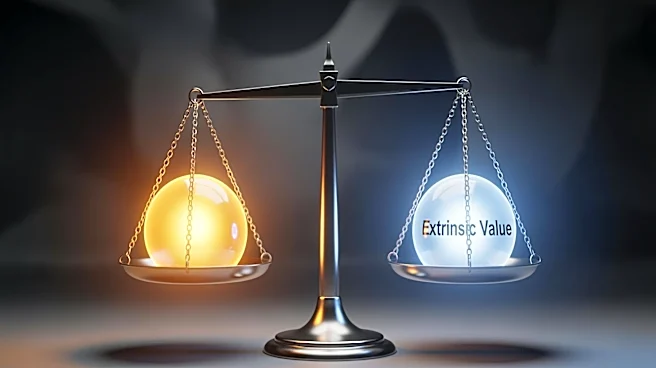








The philosophical debate on intrinsic versus extrinsic values is a central topic in ethics and social sciences. Intrinsic values are those that are valuable in themselves, while extrinsic values are valuable as a means to an end. This debate has significant implications for understanding the nature of value and its role in guiding behavior and decision-making.
Understanding Intrinsic Values
Intrinsic values are those that are worth having for their own sake, not as a means to something
else. An intrinsically valuable thing is valuable in itself, independent of its utility or function. For example, understanding science may be considered an intrinsic good, as it is worthwhile in and of itself, and also as a means of achieving other goods.
Philosophic value may be split into instrumental value and intrinsic values. An ethic good with intrinsic value may be termed an end-in-itself. An object may be both a mean and end-in-itself, highlighting the complexity of intrinsic values and their role in guiding behavior and decision-making.
The Role of Extrinsic Values
Extrinsic values, on the other hand, are worth having as a means towards getting something else that is good. An ethic good with instrumental value may be termed an ethic mean. For example, a radio is instrumentally good in order to hear music, illustrating the role of extrinsic values in facilitating the achievement of other goods.
The distinction between intrinsic and extrinsic values is not always clear-cut, as some objects are both good in themselves and also good for getting other objects that are good. In these cases, the sum of instrumental and intrinsic value of an object may be used when putting that object in value systems, which is a set of consistent values and measures.
Implications of the Debate
The debate on intrinsic versus extrinsic values has significant implications for understanding the nature of value and its role in guiding behavior and decision-making. It raises questions about what makes an action valuable and how values influence attitudes and behavior.
It is debated whether some values that are not clearly physiologically determined, such as altruism, are intrinsic, and whether some, such as acquisitiveness, should be classified as vices or virtues. This debate highlights the complexity of values and their role in shaping social norms and cultural identity.
By exploring the philosophical debate on intrinsic versus extrinsic values, we can gain insights into the nature of value and its role in guiding behavior and decision-making. This understanding helps us appreciate the diversity and complexity of human societies and the role of values in shaping cultural identity and social norms.