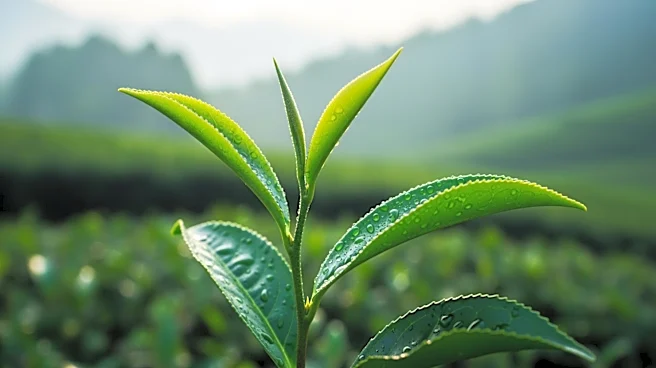






Camellia sinensis, a species of evergreen shrub or small tree, is the plant from which tea is produced. This plant has a rich history and has undergone various classifications over time. Understanding its origins and evolution provides insight into how it became the source of one of the world's most popular beverages.
Historical Background
Camellia sinensis is native to China and Southeast Asia, regions known for their long-standing tea cultures. The plant's history is deeply
intertwined with the cultural practices of these areas, where tea has been consumed for centuries. The cultivation and use of Camellia sinensis for tea production have been documented in historical texts, highlighting its significance in these regions.
The plant's journey from its native lands to becoming a global commodity is a testament to its adaptability and the cultural exchange between different societies. As trade routes expanded, so did the reach of Camellia sinensis, allowing it to be cultivated in various climates and regions around the world.
Scientific Classification
Camellia sinensis belongs to the Theaceae family, a group of flowering plants. Within this family, it is classified under the genus Camellia. The species name, sinensis, indicates its Chinese origin. Over time, botanists have identified various subspecies and varieties of Camellia sinensis, each with unique characteristics that contribute to the diversity of tea flavors and types.
The plant's classification has evolved as scientific understanding has improved. Initially, different varieties were often mistaken for separate species. However, modern taxonomy has clarified these distinctions, allowing for a more accurate understanding of the plant's genetic and phenotypic diversity.
Varieties and Cultivation
Camellia sinensis is the source of several types of tea, including white, green, oolong, pu-erh, and black teas. These varieties are not different species but rather result from variations in processing methods and the specific subspecies or cultivars used. For instance, the leaves used for white tea are minimally processed, while black tea undergoes full oxidation.
The cultivation of Camellia sinensis requires specific conditions, such as well-drained soil and a humid climate. These factors, along with the plant's genetic diversity, contribute to the wide range of flavors and qualities found in different teas. Regions like Fujian in China and Assam in India are renowned for their unique tea varieties, each reflecting the local growing conditions and traditional processing techniques.
The evolution of Camellia sinensis from a regional plant to a global staple is a fascinating journey. Its rich history, scientific classification, and diverse varieties continue to captivate tea enthusiasts and researchers alike.