

The Perseverance rover, a key component of NASA's Mars 2020 mission, is a technological marvel designed to explore the Martian surface with unprecedented precision and capability. Launched in 2020, Perseverance is equipped with state-of-the-art instruments and systems that enable it to conduct a wide range of scientific experiments. This article explores the technological advancements that make Perseverance a standout in planetary exploration.
Advanced Instrumentation
Perseverance
carries seven primary scientific instruments, each designed to perform specific tasks that contribute to the mission's objectives. Among these is the Mastcam-Z, a camera system capable of high-resolution imaging and 3D stereoscopic vision. This allows scientists to examine the Martian terrain in detail and identify geological features of interest.
Another critical instrument is the SuperCam, which uses laser-induced breakdown spectroscopy to analyze the composition of rocks and soil from a distance. This capability is essential for identifying potential biosignatures and understanding the planet's geological history. Additionally, the PIXL and SHERLOC instruments provide detailed chemical and mineralogical analyses, further enhancing our understanding of Mars' surface.
Innovative Mobility and Sampling Systems
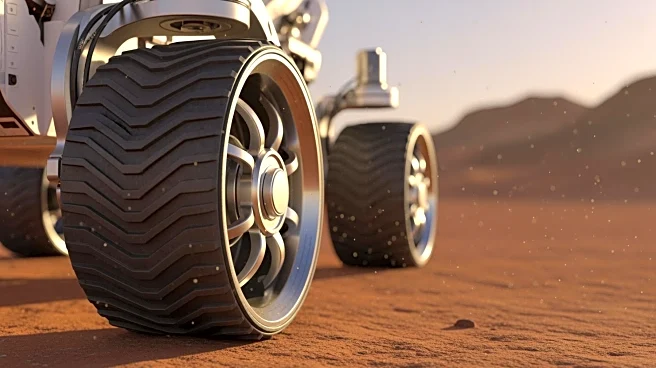
Perseverance's mobility system is a significant improvement over its predecessors. The rover's wheels are designed to be more robust, with thicker aluminum and a greater diameter, allowing it to traverse the challenging Martian terrain with ease. This durability is crucial for the rover's long-term mission, which involves extensive travel across the Jezero Crater.
The rover also features a sophisticated sampling and caching system, which is central to its mission of collecting Martian rock and soil samples. The system includes a robotic arm equipped with a coring drill and a suite of tools for handling and storing samples. These samples are intended for future retrieval and return to Earth, where they can be analyzed in detail.
Power and Communication
Perseverance is powered by a Multi-Mission Radioisotope Thermoelectric Generator (MMRTG), which provides a steady supply of electricity regardless of solar conditions. This power source enables the rover to operate continuously, even during the harsh Martian winter or dust storms that could obscure solar panels.
Communication with Earth is facilitated by a suite of antennas, including a primary UHF antenna capable of transmitting data at high speeds. This ensures that the vast amounts of data collected by Perseverance's instruments can be relayed back to scientists on Earth for analysis.
In conclusion, the Perseverance rover is a testament to human ingenuity and technological advancement. Its array of instruments and systems not only enable groundbreaking scientific research but also pave the way for future exploration of Mars. As Perseverance continues its mission, it stands as a beacon of what is possible when cutting-edge technology meets the spirit of exploration.