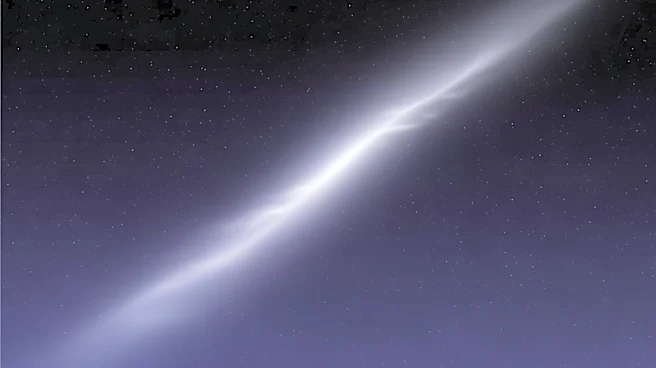





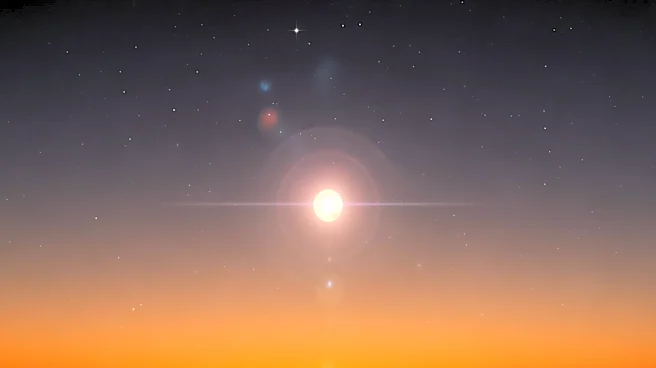

Zodiacal light, often referred to as the "false dawn," has captured the imagination of cultures and civilizations throughout history. This faint celestial glow, visible in the night sky, has been observed and recorded by various cultures, each attributing its own significance to the phenomenon. From ancient Mesoamerican civilizations to Islamic traditions, zodiacal light has played a role in shaping cultural narratives and practices.
Ancient Observations and Interpretations
The awareness of zodiacal light dates back to ancient times. According to historical accounts, Mesoamerican civilizations were aware of this celestial phenomenon before 1500. These early observations highlight the significance of the night sky in ancient cultures, where celestial events were often linked to religious and agricultural practices.In the 17th century,
the phenomenon was investigated by astronomers such as Giovanni Domenico Cassini, who contributed to the understanding of zodiacal light as sunlight scattered by interplanetary dust. Nicolas Fatio de Duillier further developed this explanation, describing the zodiacal light as a result of sunlight reflecting off a dust cloud that straddles the ecliptic plane.
Zodiacal Light in Islamic Tradition
In Islamic tradition, zodiacal light holds particular significance in the context of religious practices. The Islamic prophet Muhammad referred to it as the "false dawn" (al-fajr al-kādhib) in relation to the timing of the five daily prayers. Muslim oral tradition preserves numerous sayings, or hadith, in which Muhammad describes the difference between the light of false dawn and the true dawn (al-fajr al-sādiq), which is the first band of horizontal light at sunrise.This distinction is crucial for practitioners of Islam, as it helps determine the correct timing for fasting and daily prayers. The vast majority of Muslim scholars consider navigation twilight as the true dawn, using Muhammad's descriptions of zodiacal light to avoid errors in religious observance.
Modern Recognition and Study
In modern times, zodiacal light continues to be a subject of scientific study and cultural interest. The phenomenon is often observed by astronomers and sky enthusiasts, particularly in regions with minimal light pollution. Its faint glow, visible in a dark night sky, serves as a reminder of the vastness and complexity of our solar system.The study of zodiacal light has also contributed to our understanding of interplanetary dust and its role in the solar system. Observations by spacecraft such as Pioneer 10 and Helios have provided valuable insights into the distribution and composition of the dust cloud responsible for this celestial glow.