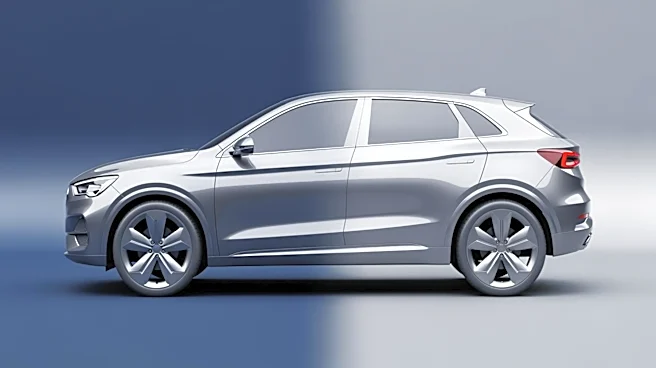







The Honda HR-V has been a staple in the subcompact crossover SUV market since its introduction in 1999. Over the years, it has undergone significant transformations, adapting to the changing needs and preferences of consumers worldwide. This article delves into the evolution of the HR-V across its three generations, highlighting the key changes and innovations that have defined its journey.
First Generation: The Beginning
The first generation of the Honda HR-V was launched in 1999,
based on the Honda Logo platform. It was initially available in Europe, Japan, and select Asia-Pacific markets. The HR-V was offered in both three-door and five-door configurations, catering to different consumer needs. The vehicle was marketed as a "Hi-rider Revolutionary Vehicle," emphasizing its unique design and functionality.
During this period, the HR-V was equipped with a 1.6-liter engine, available in both SOHC and VTEC variants. The model featured a continuously variable transmission (CVT) as an option, which was a notable innovation at the time. The HR-V's design focused on minimizing pedestrian injuries, incorporating features like ABS brakes, dual airbags, and a rear spoiler with an LED brake light.
Second Generation: A New Era
After a seven-year hiatus, Honda reintroduced the HR-V in 2013, based on the third-generation Honda Fit platform. This second generation marked a significant shift in design and technology, with the model being marketed as the Honda Vezel in Japan and China. The HR-V was now available in North America, Australia, Brazil, and select Asian markets.
The second-generation HR-V was inspired by coupe designs, featuring a sloping roof and hidden rear door handles. It offered increased practicality, with a boot space of up to 1,670 liters when the rear seats were folded. The model also incorporated Honda's Magic Seats system, allowing for versatile interior configurations. The body utilized ultra-high-strength steel grades, enhancing safety and durability.
Third Generation: Modern Innovations
The third generation of the HR-V was unveiled in 2021, with the nameplate split between two different vehicles for global markets. The North American and Chinese versions were based on the eleventh-generation Civic, marketed as the Honda ZR-V outside these regions.
This latest iteration of the HR-V continues to emphasize advanced safety and technology, reflecting Honda's commitment to innovation. The model features updated energy management controls and new safety features as part of the Honda Sensing system. The HR-V's design and functionality have evolved to meet the demands of modern consumers, ensuring its place as a leading subcompact crossover SUV.