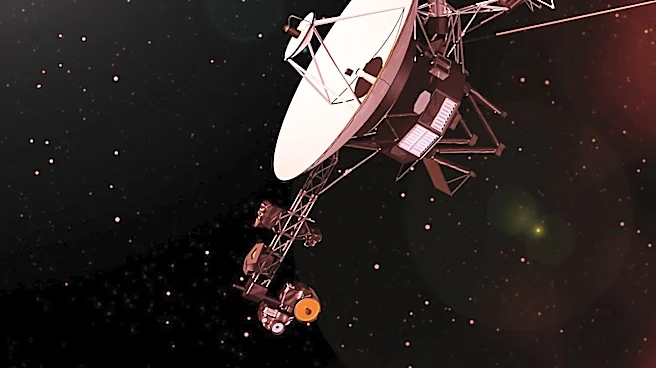

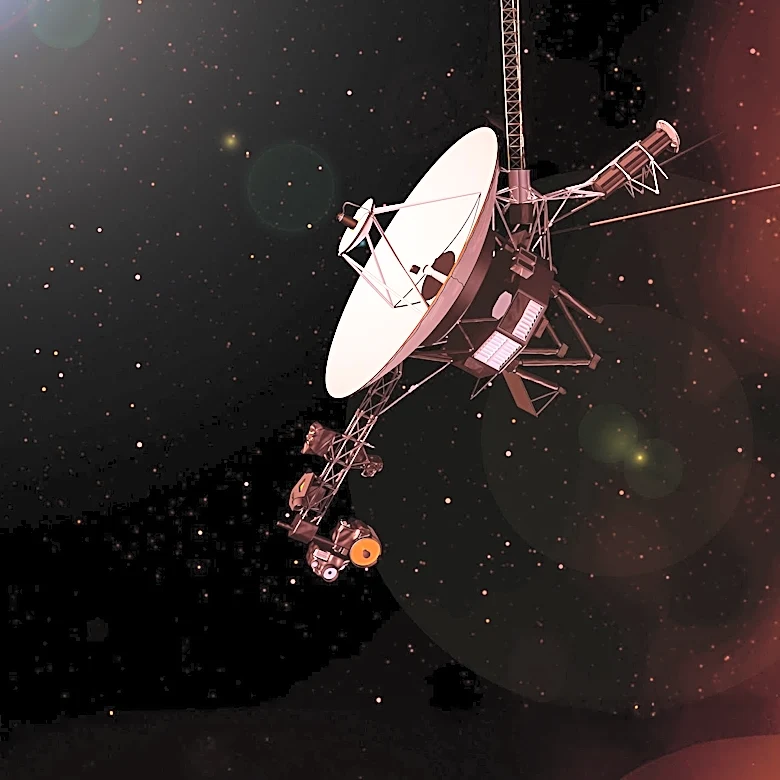






Pioneer 10, launched in 1972, marked a significant milestone in space exploration as the first spacecraft to travel through the asteroid belt and make a close encounter with Jupiter. This mission, managed by NASA's Ames Research Center, was a groundbreaking endeavor that paved the way for future deep space missions. Over its 30-year journey, Pioneer 10 provided invaluable data about the outer solar system, setting the stage for subsequent missions like
Voyager.
Launch and Early Mission
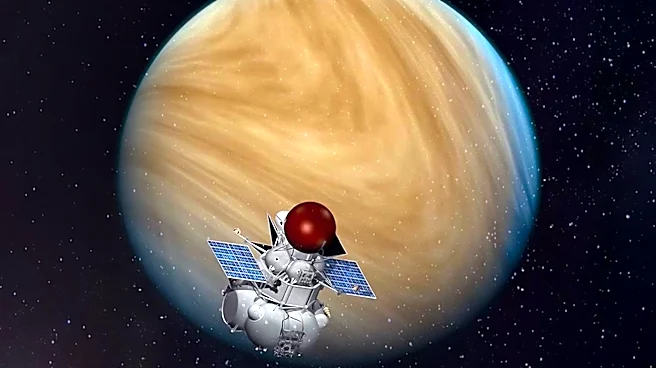
Pioneer 10 was launched on March 3, 1972, from Cape Canaveral, Florida, aboard an Atlas-Centaur rocket. The spacecraft was designed to be lightweight and spin-stabilized, with a hexagonal structure housing its instruments and a large parabolic dish antenna for communication. Its power was supplied by four radioisotope thermoelectric generators, which provided a combined 155 watts at launch.
The initial phase of the mission involved traversing the asteroid belt, a region filled with rocky debris between the orbits of Mars and Jupiter. This was a significant challenge, as it was the first time a spacecraft attempted to navigate this area. Between July 1972 and February 1973, Pioneer 10 successfully crossed the asteroid belt, providing scientists with valuable data about the density and distribution of asteroids.
Encounter with Jupiter
Pioneer 10's encounter with Jupiter was a major highlight of its mission. The spacecraft began photographing the gas giant on November 6, 1973, from a distance of 25 million kilometers. On December 3, 1973, it made its closest approach, coming within 132,252 kilometers of Jupiter's cloud tops. This flyby provided the first close-up images of Jupiter, revealing details about its atmosphere, magnetic field, and moons.
The data collected during this encounter was groundbreaking. Pioneer 10 confirmed the existence of Jupiter's intense radiation belts and provided insights into the planet's magnetic field, which was found to be much stronger than Earth's. The spacecraft also captured images of Jupiter's moons, including Ganymede and Europa, offering a glimpse into their surface features.
Legacy and Final Signal
After its successful mission to Jupiter, Pioneer 10 continued its journey into the outer solar system. It crossed the orbit of Saturn in 1976 and eventually became the first human-made object to leave the vicinity of the major planets. The mission officially ended on March 31, 1997, when Pioneer 10 was 67 astronomical units from the Sun.
Despite the end of its official mission, Pioneer 10 continued to send weak signals back to Earth until January 23, 2003. At that time, it was 12 billion kilometers away, more than twice the distance from the Sun to Pluto. The final signal marked the end of a remarkable journey that had lasted over three decades.
Pioneer 10's legacy lives on as a testament to human curiosity and the desire to explore the unknown. Its success laid the groundwork for future missions, demonstrating the feasibility of long-duration space travel and the potential for interstellar exploration. As it drifts into interstellar space, Pioneer 10 carries with it a plaque designed to inform any intelligent life that may find it about its origins, a symbol of humanity's quest to reach beyond the stars.