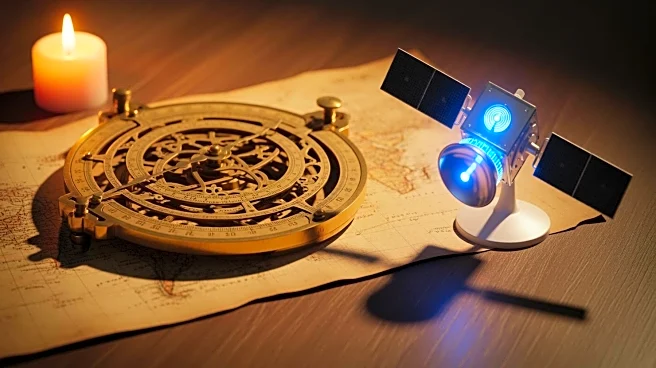




Climatology, the scientific study of Earth's climate, has evolved significantly over the centuries. From its early beginnings in ancient Greece to its current status as a vital field within the atmospheric sciences, climatology has expanded our understanding of long-term weather patterns and climate change. This article explores the historical development of climatology, highlighting key milestones and the evolution of methods used to study climate.
Ancient Beginnings and Early Observations
The formal study of climate can be traced back to ancient Greece, where the term "climate" originated from the Greek word "klima," meaning "slope." This referred to the inclination of the Earth's axis, which was believed to influence climate. One of the earliest influential texts on climate was "On Airs, Waters, and Places," written by Hippocrates around 400 BCE. This work explored the impact of climate on human health and cultural differences, laying the groundwork for future studies.
In China, the scientist Shen Kuo made significant contributions to early climatology. In the 11th century, he observed petrified bamboos in a dry region unsuitable for bamboo growth, leading him to infer that climates naturally shifted over time. These early observations set the stage for a more systematic approach to studying climate.
The Scientific Revolution and Systematic Recordkeeping
The Scientific Revolution brought about significant advancements in climatology. The invention of thermometers and barometers allowed for systematic recordkeeping of weather data. By the mid-17th century, scientists like Edmund Halley and Benjamin Franklin were making important contributions. Halley published a map of trade winds, while Franklin mapped the Gulf Stream, enhancing our understanding of atmospheric and oceanic patterns.
During the early 20th century, climatology focused on describing regional climates, providing valuable statistics for agriculture and other industries. This period emphasized the concept of climate normals, which are averages of weather data over 30 years. These normals helped define what was considered "normal" weather and provided a baseline for identifying climate variability.
Modern Climatology and Climate Change
In the latter half of the 20th century, climatology shifted its focus to understanding climate change. The study of past climate changes, such as ice ages, became crucial in predicting future trends. Climatologists began using advanced models to simulate climate dynamics and project future climate scenarios.
Today, climatology is an interdisciplinary field that incorporates aspects of oceanography, biogeochemistry, and atmospheric sciences. It plays a critical role in addressing global challenges like climate change, helping predict future climate trends and informing policy decisions. As our understanding of climate continues to evolve, climatology remains a vital science in navigating the complexities of Earth's climate system.