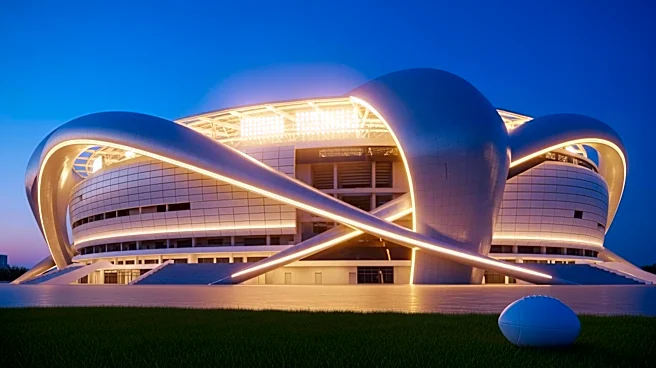








Lusail Stadium stood out as a centerpiece of the 2022 FIFA World Cup, hosting the final match between Argentina and France. As the largest stadium in Qatar and the Middle East, Lusail Stadium was not only a venue for the tournament's climax but also a symbol of Qatar's ambition and capability to host a global event of this magnitude. Its design, capacity, and future plans reflect the broader goals of the World Cup's legacy.
Hosting the World Cup Final
Lusail Stadium was the chosen
venue for the final match of the 2022 FIFA World Cup, a testament to its significance and grandeur. With a seating capacity of 88,966, it was the largest stadium used during the tournament. The final, held on December 18, 2022, saw Argentina and France compete for the coveted title, with Argentina emerging victorious. This match was a highlight of the tournament, drawing global attention and showcasing the stadium's ability to host such a prestigious event.
The stadium's design and facilities were tailored to provide an exceptional experience for both players and spectators. Its state-of-the-art cooling technology, powered by solar energy, ensured a comfortable environment despite the region's climate. The successful hosting of the final at Lusail Stadium underscored Qatar's commitment to delivering a world-class event.
Design and Construction
Lusail Stadium's construction was a joint venture between HBK Contracting and the China Railway Construction Corporation. The stadium was designed to be environmentally sustainable, with a focus on reducing its carbon footprint. Its cooling system, powered by solar energy, was a key feature, aligning with Qatar's vision for a sustainable World Cup.
The stadium's design also incorporated elements that reflected Qatar's culture and heritage. Its architectural features were inspired by traditional Arab craftsmanship, blending modern technology with cultural symbolism. This approach not only enhanced the stadium's aesthetic appeal but also reinforced its role as a cultural landmark.
Future Plans and Legacy
Following the World Cup, Lusail Stadium is set to be reconfigured into a 40,000-seat venue. The excess seating will be removed, and the stadium will be repurposed to include community spaces such as shops, cafes, and sports facilities. This transformation is part of Qatar's broader strategy to ensure that the World Cup infrastructure continues to benefit the community long after the tournament.
In conclusion, Lusail Stadium was more than just a venue for the 2022 FIFA World Cup final. It was a symbol of Qatar's ambition and vision for the future, combining world-class sports infrastructure with sustainable development. Its role in the World Cup and its planned transformation highlight the dual legacy of sports and community that Qatar aims to achieve.