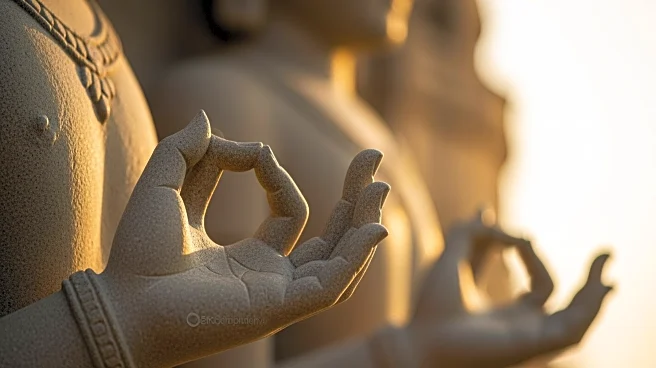

Mudras have been a vital element in Buddhist iconography, serving as symbolic gestures that convey profound spiritual meanings. These gestures are prominently featured in depictions of the Buddha and other
deities, representing key moments in Buddhist teachings and history. This article explores the historical development of mudras in Buddhist art and their significance in conveying spiritual narratives.
Historical Origins and Development
The use of mudras in Buddhist iconography can be traced back to ancient India, where they were employed to depict significant events in the life of the Buddha. The bhūmisparśa mudrā, or "earth witness" gesture, is one of the most iconic images, symbolizing the moment of Buddha's enlightenment. This gesture, with the Buddha touching the earth, represents his triumph over the temptations of Mara, the evil one, and his attainment of spiritual awakening.
Mudras have evolved over time, adapting to different cultural contexts as Buddhism spread across Asia. In East Asia, variations of the bhūmisparśa mudrā can be seen, reflecting regional artistic styles and interpretations. These adaptations highlight the dynamic nature of mudras and their ability to convey universal spiritual truths across diverse cultures.
Key Mudras in Buddhist Art
Several mudras are central to Buddhist iconography, each representing specific teachings or moments in the Buddha's life. The dharmachakra pravartana mudrā, or "turning of the wheel," signifies the Buddha's first sermon and the dissemination of his teachings. This gesture, often depicted with the Buddha's hands in front of his chest, symbolizes the spread of the Dharma and the establishment of the Buddhist community.
Another significant mudra is the abhaya mudrā, or "gesture of fearlessness," which represents protection and the dispelling of fear. This gesture is commonly seen in depictions of the Buddha standing with his right hand raised, offering reassurance and peace to followers. These mudras, among others, serve as visual shorthand for complex spiritual concepts, making them accessible to practitioners and observers alike.
Cultural Impact and Legacy
Mudras have left a lasting impact on Buddhist art and culture, influencing artistic expressions and spiritual practices across Asia. Their presence in Buddhist iconography has helped preserve and communicate the teachings of the Buddha, ensuring their relevance and accessibility to future generations.
As mudras continue to be a central element in Buddhist art, they serve as a bridge between the past and present, connecting practitioners to the rich spiritual heritage of Buddhism. Their enduring legacy is a testament to the power of visual symbols in conveying profound spiritual truths and fostering a deeper understanding of Buddhist teachings.