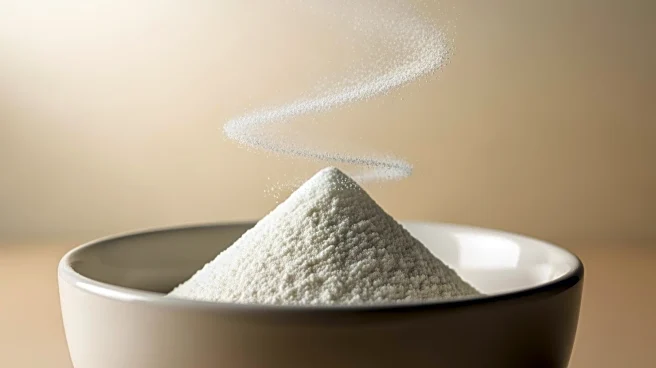




Powdered milk, also known as milk powder, is a versatile dairy product that has undergone significant evolution since its inception. This article delves into the historical development of powdered milk, its manufacturing processes, and its diverse applications in today's world. From its early beginnings to its current role in food and biotechnology, powdered milk has become an essential component in various industries.
Historical Development of Powdered Milk
The concept of powdered milk
dates back to the time of Kublai Khan, when Mongolian Tatar troops carried sun-dried skimmed milk as a form of sustenance. However, the first modern production process for dried milk was invented by Russian doctor Osip Krichevsky in 1802. This innovation laid the groundwork for the commercial production of powdered milk, which began in earnest in the 19th century.
In 1832, Russian chemist M. Dirchoff organized the first commercial production of dried milk. The process continued to evolve, with T. S. Grimwade taking a patent on a dried milk procedure in 1855. By the late 19th century, powdered milk had become a staple in various regions, thanks to its long shelf life and ease of transportation.
Manufacturing Processes of Powdered Milk
Modern powdered milk is typically produced through spray drying, a process that involves concentrating pasteurized milk in an evaporator to about 50 percent milk solids. The concentrated milk is then sprayed into a heated chamber, where the water evaporates almost instantly, leaving behind fine particles of powdered milk solids.
Alternatively, drum drying can be used, where milk is applied as a thin film to the surface of a heated drum, and the dried milk solids are scraped off. However, this method often results in a cooked flavor due to caramelization. Freeze drying is another process that preserves more nutrients compared to drum drying, making it a preferred method for certain applications.
Modern Applications of Powdered Milk
Powdered milk is widely used in various industries today. It is a common ingredient in food products, serving as an additive for nutrition and flavor. In biotechnology, fat-free powdered milk is used as a saturating agent to block nonspecific binding sites on supports like blotting membranes.
In the food industry, powdered milk is a staple in confectionery, baked goods, and infant formula. Its long shelf life and nonperishable nature make it a favorite among survivalists and hikers. Additionally, powdered milk is used in developing countries due to its reduced transport and storage costs.
Overall, powdered milk has come a long way from its early days, evolving into a product with diverse applications and significant importance in various fields.