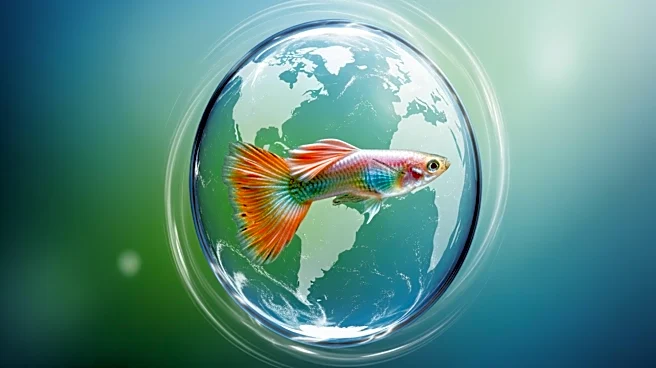







The guppy, a small but vibrant freshwater fish, has made a significant impact on ecosystems around the world. Originally native to parts of South America, guppies have been introduced to various environments across the globe. This article explores the journey of the guppy from its native habitats to its current status as one of the most widely distributed tropical fish species.
Native Origins and Initial Spread
Guppies are native to northeastern South America, including countries like
Brazil, Guyana, and Venezuela. In these regions, they thrive in freshwater bodies, particularly in streams near coastal areas. The adaptability of guppies to different environmental conditions has played a crucial role in their ability to spread beyond their native range.
The initial spread of guppies beyond South America was largely due to human intervention. They were introduced to various countries as a means of mosquito control, with the expectation that they would consume mosquito larvae and help reduce the spread of diseases like malaria. This practice led to the establishment of guppy populations in many parts of the world, including Asia, Africa, and North America.
Ecological Impact and Adaptation
While the introduction of guppies was intended to be beneficial, it has often resulted in unintended ecological consequences. In many regions, guppies have had a negative impact on native fish populations. Their presence can lead to increased competition for resources, and in some cases, they have been known to consume the eggs of native fish species.
Despite these challenges, guppies have demonstrated remarkable adaptability. They are capable of surviving in a range of environmental conditions, including brackish water. This adaptability has allowed them to colonize various habitats, from small streams to larger bodies of water. Their ability to acclimate to different salinity levels has even enabled them to thrive in environments similar to those of their molly cousins.
The Role of Guppies in Scientific Research
Beyond their ecological impact, guppies have become a valuable model organism in scientific research. Their adaptability and prolific breeding make them ideal subjects for studies in ecology, evolution, and behavior. Researchers have used guppies to explore topics such as predator-prey interactions, sexual selection, and the effects of environmental changes on species adaptation.
The global journey of the guppy highlights both the opportunities and challenges associated with species introduction. While they have provided insights into ecological and evolutionary processes, their impact on native ecosystems serves as a reminder of the complexities involved in managing introduced species. As guppies continue to thrive in diverse environments, they remain a subject of interest for scientists and conservationists alike.