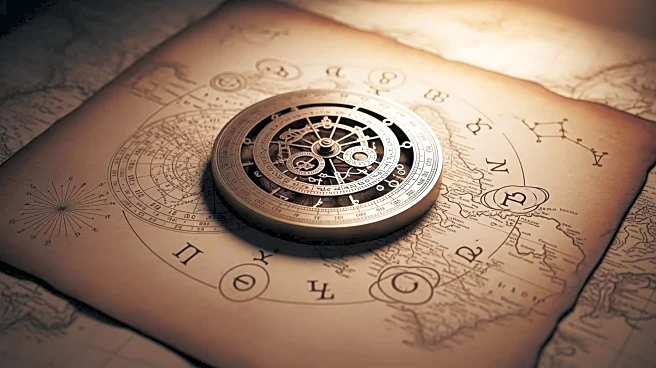




Psychological astrology, also known as astropsychology, is a fascinating blend of astrology and psychology. This unique field emerged from the cross-fertilization of astrology with depth psychology, humanistic psychology, and transpersonal psychology. Despite its intriguing nature, psychological astrology is considered a pseudoscience due to the lack of methodologically sound scientific studies supporting its claims. This article delves into the origins
and development of psychological astrology, highlighting key figures and theories that have shaped its evolution.
The Jungian Influence
The roots of psychological astrology can be traced back to the twentieth century, when the Swiss psychiatrist Carl Jung began exploring the symbolic meaning of dreams, conversations, and paintings. Jung observed recurring mythical themes or archetypes, which he believed channeled experiences and emotions, resulting in recognizable patterns of behavior. He proposed that these archetypes were universal and timeless, influencing human behavior in predictable ways.
Jung's research led him to draw connections between these archetypal images and astrological themes, concluding that the symbolic heavenly figures described by constellations were inspired by projections from the collective unconscious. Jung famously stated, "Astrology represents the sum of all the psychological knowledge of antiquity," highlighting the deep connection he perceived between astrology and psychology.
The Establishment of Psychological Astrology
Several astrologers and psychologists pursued Jung's theories, integrating them into their writings, teachings, and practices. Dane Rudhyar was one of the first astrologers to combine Jungian psychology with astrology, coining the term "humanistic astrology." His work laid the foundation for psychological astrology, which gained prominence in the late 20th century through the efforts of Liz Greene and Stephen Arroyo.
In 1983, Greene and Howard Sasportas founded the Centre for Psychological Astrology in London, further solidifying the field's presence. Meanwhile, in Switzerland, Bruno and Louise Huber developed their own method of astrological psychology, known as the Huber Method, influenced by Roberto Assagioli's work with psychosynthesis.
Criticism and Scientific Challenges
Despite its development and popularity, psychological astrology faces significant criticism. The scientific community widely regards astrology as a pseudoscience, pointing to confirmation bias as a major flaw. Confirmation bias is the tendency to interpret new information in a way that confirms preexisting beliefs, which can skew the perceived accuracy of astrological predictions.
Research has also challenged the validity of psychological astrology. A notable study by Shawn Carlson published in Nature involved 28 professional astrologers attempting to match horoscopes with psychological profiles. The results showed that astrologers were unable to perform better than chance, further questioning the scientific basis of psychological astrology.
In conclusion, psychological astrology is a captivating field that intertwines astrology with psychological theories. While its origins and development are rooted in influential figures like Carl Jung, the lack of scientific support continues to challenge its credibility. Despite this, psychological astrology remains a popular and intriguing area of study for those interested in the intersection of astrology and psychology.








![The Power of the Marker: Why a 50-Cent Clicker is Smarter than a Shock Collar]](https://glance-mob.glance-cdn.com/public/cardpress/binge-magazine-card-generation/spaces/US/en/discover-daily/images/ppid_7byehtbd-image-177160379001460949.webp)