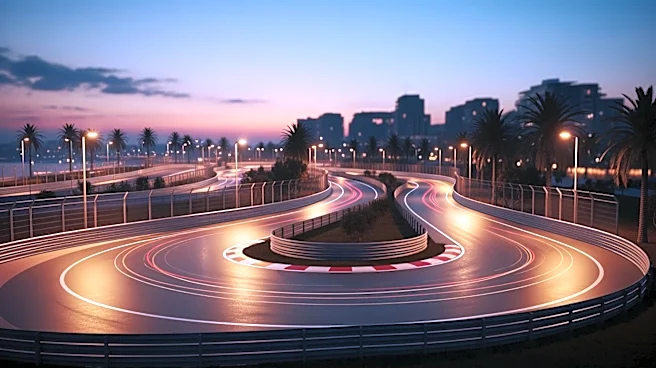








The Surfers Paradise Street Circuit, located in Queensland, Australia, has undergone significant changes since its inception. Known for hosting thrilling motorsport events, this temporary street circuit has evolved in both layout and purpose over the years. From its original design to its current form, the circuit has adapted to meet the demands of modern racing while maintaining its unique beachside charm.
The Original Layout
The Surfers Paradise Street Circuit was initially
designed by Ron Dickson of D3 Motorsport Development. The original layout, proposed in 1991, featured several fast sections and two chicanes. However, concerns about high speeds led to modifications before the circuit's opening. The first chicane was added to reduce speeds at critical points, ensuring safety for drivers and spectators alike. This design was the fourth concept put forward for the area, highlighting the careful planning involved in its creation.
The circuit opened on March 15, 1991, for the Gold Coast IndyCar Grand Prix. It was a significant event, marking the beginning of a new era in Australian motorsport. The original track length was 4.470 km, providing ample space for high-speed racing and thrilling competitions.
Changes and Shortening
In 2010, the Surfers Paradise Street Circuit underwent a major transformation. The track was shortened to 2.960 km, a decision influenced by the construction of the G:link light rail line. This change was also aimed at reducing the cost of running events and minimizing the impact on local residents and tourists. The new layout included a hairpin at the Turn 2 chicane, which rejoined the original track at the Esses.
The shortened layout was suggested by Tony Cochrane, then CEO of V8 Supercars, after the A1 Grand Prix cars dropped out of the 2009 event. This adaptation allowed the circuit to continue hosting major events, such as the Supercars Championship, while maintaining its status as a premier racing destination.
Modern-Day Circuit
Today, the Surfers Paradise Street Circuit is renowned for its international motor racing safety standards. The Confederation of Australian Motorsport and the FIA have applauded the circuit for its advancements in safety, including the installation of double-height debris fencing in high-impact areas.
The circuit's construction is managed by local firm iEDM, specializing in motorsport venue engineering. Over a full year, plans are laid to transform the bustling area into a high-speed racing venue. This includes erecting bridges, grandstands, and extensive fencing, showcasing the circuit's ability to adapt and thrive in the modern racing world.
The Surfers Paradise Street Circuit continues to be a benchmark for temporary street circuits worldwide, reflecting its rich history and ongoing evolution.