





The Colorado River Compact of 1922 is a pivotal agreement that shaped water distribution in the Southwestern United States. This compact was designed to allocate water rights among seven states, ensuring a fair distribution of the Colorado River's resources. The agreement was a response to growing concerns over water scarcity and the need for cooperative management of the river's flow.
The Genesis of the Compact
The idea for the Colorado River Compact emerged in the early 20th
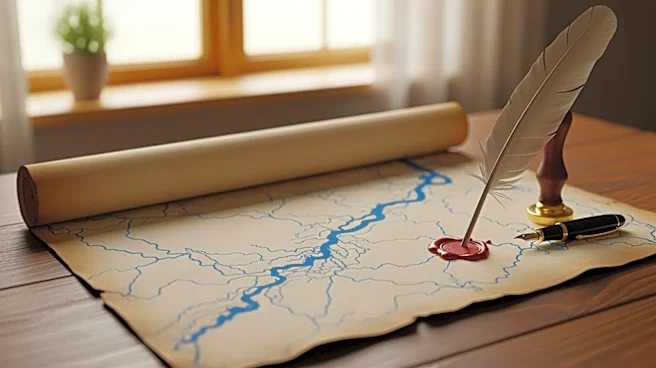
century as the demand for water in the arid Southwest increased. The League of the Southwest, formed in 1917, played a crucial role in advocating for the development of the river. By 1921, Congress authorized the states to negotiate a compact to allocate the river's resources. The compact was signed in 1922 at Bishop's Lodge near Santa Fe, New Mexico, with the support of Secretary of Commerce Herbert Hoover.
The compact divided the river basin into two areas: the Upper Basin, comprising Colorado, New Mexico, Utah, and Wyoming, and the Lower Basin, including Nevada, Arizona, and California. Each basin was allocated 7.5 million acre-feet of water annually. This division was based on rainfall patterns observed before the compact's signing, aiming for an equitable distribution of water.
Challenges and Ratification
Despite the compact's signing, it faced challenges in ratification. Six states ratified the agreement by January 1923, but Arizona held out until 1944. Arizona's reluctance stemmed from concerns over water rights and the potential impact on its agricultural development. The fear that Mexico might claim surplus water further complicated the situation.
The compact's provisions did not address several critical issues, such as Indian or Mexican water rights and evaporation losses. These omissions led to ongoing disputes and legal battles, including the notable Arizona v. California case, which was resolved in 1963. This case highlighted the complexities of water allocation and the need for clear guidelines.
Impact and Legacy
The Colorado River Compact enabled widespread irrigation and development in the Southwest, supporting projects like the Hoover Dam and Lake Powell. These developments transformed the region, providing water for agriculture, urban areas, and hydroelectric power.
However, the compact also faced criticism for overestimating the river's flow, leading to water shortages exacerbated by drought. The compact's legacy is a testament to the challenges of managing shared water resources in an arid region. It remains a cornerstone of water law in the United States, influencing subsequent agreements and treaties.
The Colorado River Compact of 1922 was a landmark agreement that addressed the pressing need for water management in the Southwest. Its historical significance lies in its role in shaping the region's development and its ongoing influence on water policy.