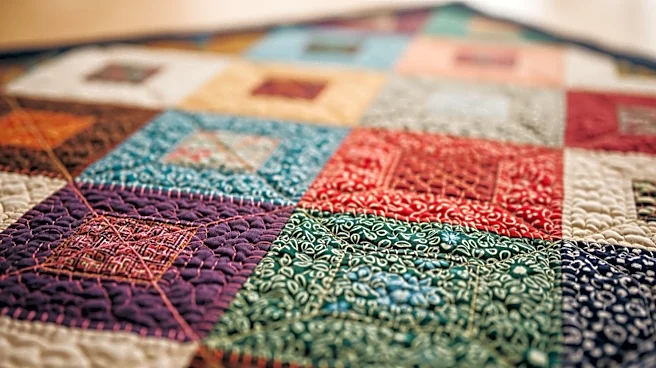







Quilting is a universal craft that transcends cultural boundaries, with each region contributing its unique styles and techniques. From the intricate patterns of Amish quilts to the vibrant colors of African-American quilts, quilting reflects the rich tapestry of human creativity and tradition. This article explores the diverse quilting traditions from around the world, highlighting their cultural significance and distinctive characteristics.
Amish Quilts: Simplicity and Precision
Amish
quilts are renowned for their simplicity and precision, reflecting the Amish community's values of humility and craftsmanship. Typically made from solid fabrics, these quilts feature geometric patterns and are constructed entirely by hand. The Lancaster County Amish are known for their Diamond-in-a-Square and Bars patterns, while other communities favor designs like Brick and Log Cabins.
Amish quilts are often characterized by their use of wide borders and lavish quilting, with color choices varying by community. These quilts serve as both functional bed coverings and expressions of artistic skill, embodying the Amish commitment to quality and tradition.
African-American Quilts: A Story of Resilience
African-American quilting has a rich history rooted in the experiences of enslaved Africans and their descendants. This tradition is marked by bright colors, strip arrangements, and asymmetrical patterns, reflecting a spirit of improvisation and resilience. Harriet Powers, an African-American quilter, is celebrated for her "story quilts," which use pictorial images to convey narratives and cultural heritage.
The Gee's Bend quilting community in Alabama is renowned for its bold, improvisational style, characterized by pattern improvisation and visual motion. These quilts have gained national recognition, celebrated for their artistic innovation and cultural significance.
Global Quilting Traditions
Quilting traditions extend beyond the United States, with each culture adding its unique flair. In Japan, sashiko stitching is a form of decorative quilting that uses heavy, white cotton thread on indigo fabric. This technique, originally used for warmth, has evolved into a purely decorative art form.
In South Asia, Nakshi Kantha quilts are made from scraps and worn-out fabric, stitched together with old sari threads. These quilts, originating in India, are known for their intricate embroidery and vibrant colors. Similarly, Ralli quilts from Pakistan and India feature bold patterns and colors, often made from recycled materials.
Quilting is a global craft that celebrates diversity and creativity. Each tradition tells a story, weaving together the threads of history, culture, and artistry. Whether through the precise stitches of an Amish quilt or the vibrant patterns of a Ralli quilt, quilting continues to connect people across cultures, preserving the rich heritage of this timeless craft.