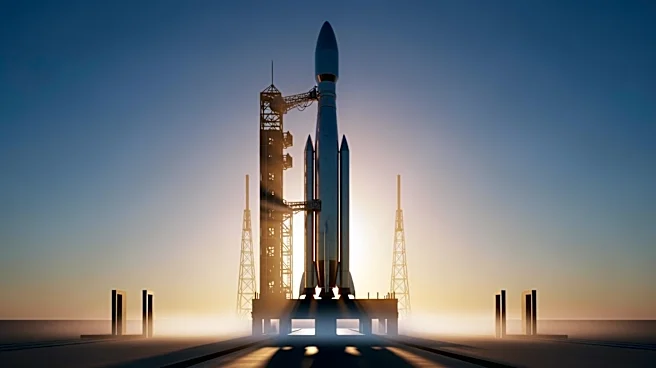

The Saturn V rocket, developed by NASA for the Apollo program, is widely regarded as one of the most significant technological achievements in the history of space exploration. This article examines the technological innovations and engineering feats that made the Saturn V a marvel of its time. As the most powerful rocket ever built, the Saturn V played a crucial role in launching humans to the Moon, showcasing the pinnacle of engineering and scientific
collaboration.
Engine Design and Power
At the heart of the Saturn V's technological prowess were its powerful engines, which provided the necessary thrust to propel the rocket beyond Earth's atmosphere. The rocket's first stage, the S-IC, was powered by five Rocketdyne F-1 engines, each capable of producing 1.5 million pounds of thrust. These engines were arranged in a quincunx pattern, with the center engine fixed and the four outer engines hydraulically turned with gimbals to steer the rocket.
The F-1 engines were a technological marvel, designed to burn RP-1 fuel with liquid oxygen as the oxidizer. This combination provided the high thrust needed to lift the massive rocket off the ground. The second stage, the S-II, was powered by five Rocketdyne J-2 engines, which used liquid hydrogen and liquid oxygen. The J-2 engines were arranged similarly to the F-1 engines, with the outer engines used for control. The third stage, the S-IVB, was powered by a single J-2 engine, which could be restarted in space for trans-lunar injection.
Structural Design and Materials
The Saturn V's structural design was another key aspect of its technological innovation. The rocket was primarily constructed of aluminum, titanium, polyurethane, cork, and asbestos, materials chosen for their strength-to-weight ratio and thermal properties. The first stage's structure was built of aluminum alloy, with major components including the forward skirt, oxidizer tank, intertank section, fuel tank, and thrust structure.
The second stage's structure consisted of a body shell, propellant tank, and thrust structure, all made of 7075 aluminum alloy. The liquid hydrogen tank featured a common bulkhead with the liquid oxygen tank, reducing weight and increasing efficiency. The third stage's structure included a forward skirt, propellant tanks, aft skirt, thrust structure, and aft interstage, all constructed with a skin/stringer type aluminum alloy airframe.
The Saturn V's design also incorporated small solid-propellant ullage motors to ensure proper positioning of the liquid propellants during stage separation. These motors played a crucial role in maintaining the rocket's stability and trajectory during its missions.
Guidance and Control Systems
The Saturn V's guidance and control systems were essential to its success, ensuring the rocket followed the correct trajectory and reached its intended destination. The rocket's instrument unit, designed by IBM and the Marshall Space Flight Center, housed the guidance, navigation, and control equipment. This included a digital computer, analog flight control computer, emergency detection system, inertial guidance platform, control accelerometers, and control rate gyros.
The instrument unit was responsible for guiding the rocket from launch through Earth orbit insertion and trans-lunar injection. It maintained the rocket's state vector by integrating accelerometer measurements and sent firing and steering commands to the main engines and auxiliary thrusters. The range safety system, which could be remotely activated to terminate thrust and destroy the vehicle if necessary, was also housed within the instrument unit.
The Saturn V rocket's technological innovations and engineering feats were instrumental in achieving the goals of the Apollo program. Its successful design and execution enabled humans to explore the Moon and return safely to Earth, marking a significant milestone in the history of space exploration. The Saturn V remains a testament to human ingenuity and the power of scientific collaboration, inspiring future generations to reach for the stars.