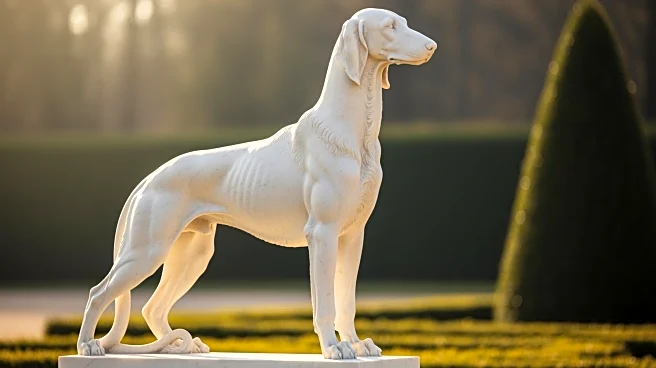

The Salish Wool Dog, also known as the Comox dog or Clallam Indian Dog, holds a unique place in the history of North American dog breeds. Developed by the Coast Salish peoples of Washington state and British
Columbia, this extinct breed was primarily used for textile production. The Salish Wool Dog was a white, long-haired, Spitz-type dog, and its wool was highly valued for weaving. This article delves into the historical timeline and development of this fascinating breed.
Origins and Early History
The Salish Wool Dog's history can be traced back to approximately 5,000 years ago, with remains found in archaeological sites within Coastal Salish territory. These dogs were distinct from the coyote-like village dogs, and the Salish peoples maintained them as separate populations. The Salish Wool Dog was kept in packs of about 12 to 20 animals and was primarily fed raw and cooked salmon. To preserve the breed's characteristics, including its preferred white color, these dogs were confined on islands and in gated caves.
The Coast Salish peoples were renowned for their weaving and knitting skills, yet they did not raise sheep. Instead, they relied on the Salish Wool Dog as a consistent, domesticated source of high-quality wool. Mountain goat fur was also used, but it was less reliable due to the wild nature of the goats. The Salish Wool Dog provided a steady supply of wool, which was sheared like sheep in May or June.
Decline and Extinction
During the 1800s, the use of dog wool began to decline, leading to the eventual extinction of the Salish Wool Dog in the late 1800s or early 1900s. Ethnographer George Gibbs received a pelt during the Northwest Boundary Survey in 1859, which was later rediscovered in the National Museum of Natural History's collection in 2003. This specimen provided valuable genomic information, revealing that the Salish Wool Dog diverged from other breeds as much as 5,000 years ago.
The decline of the breed was influenced by the introduction of European dogs and changes in textile production methods. Despite efforts to preserve the breed, the Salish Wool Dog could not withstand the pressures of hybridization and changing cultural practices.
Legacy and Cultural Impact
The Salish Wool Dog played a significant role in the cultural and economic life of the Coast Salish peoples. Woolen blankets made from the dog's fur were of great social, cultural, and spiritual significance. Women were traditionally responsible for weaving these blankets, which required serious commitment and skill. The blankets represented wealth and were often given away during potlatch ceremonies or used as currency.
The Salish Wool Dog's legacy continues to be remembered through historical records and traditional knowledge. Its unique genetic makeup and phenotype were preserved by ancestral Coast Salish societies, highlighting the breed's importance in their cultural heritage. Today, the Salish Wool Dog serves as a reminder of the rich history and traditions of the Coast Salish peoples.