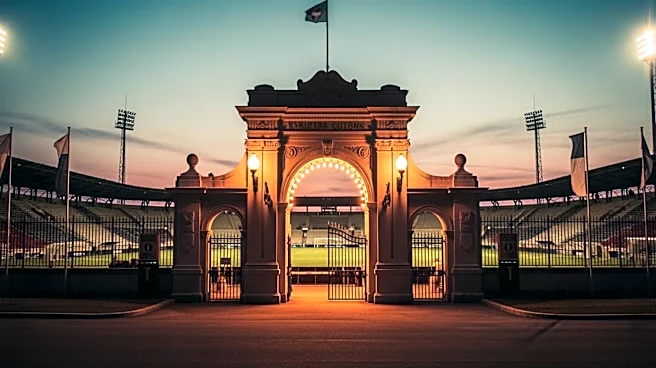




Griffith Stadium was more than just a baseball park; it was a vibrant hub for a variety of sports and cultural events in Washington, D.C. From hosting major league baseball games to serving as a venue for football, boxing, and music, Griffith Stadium played a significant role in the city's cultural landscape. This article explores the diverse range of events that took place at Griffith Stadium, highlighting its impact on sports and culture.
Baseball and Football at Griffith Stadium
Griffith
Stadium was primarily known as the home of the Washington Senators, hosting American League games from 1911 to 1960. The stadium was a pitcher's park, with distant fences that challenged even the most powerful hitters. Despite this, legendary sluggers like Babe Ruth and Mickey Mantle managed to hit impressive home runs, adding to the stadium's storied history.
In addition to baseball, Griffith Stadium was a key venue for football. The Washington Redskins of the NFL played at Griffith Stadium for 24 seasons, from 1937 to 1960. The stadium hosted notable games, including the 1940 and 1942 NFL Championship Games. The Redskins' presence at Griffith Stadium contributed to its reputation as a premier sports venue, drawing large crowds and fostering a passionate fan base.
Cultural and Musical Events
Griffith Stadium was not limited to sports; it also hosted a variety of cultural and musical events. The stadium was home to numerous boxing matches, including fights by the legendary Joe Louis. In 1942, a unique event took place when musicians Louis Armstrong and Charlie Barnet performed in a "battle of music," drawing 18,000 fans. The event was so lively that it led to a minor riot, showcasing the stadium's ability to host dynamic cultural gatherings.
The stadium also served as a venue for public school events, church revivals, and annual ROTC drill competitions. In 1960, Billy Graham held a crusade at Griffith Stadium, preaching to thousands from a platform near second base. These events highlighted the stadium's versatility and its role as a community gathering place.
Legacy and Impact
Griffith Stadium's legacy extends beyond sports and cultural events. It was a symbol of integration, hosting games for the Negro league Homestead Grays during the 1940s. The stadium was also a site of racial disputes, with segregated seating policies that were eventually challenged and changed.
Today, Griffith Stadium is remembered as a historic venue that brought together diverse communities through sports and culture. Although it was demolished in 1965, its impact on Washington, D.C., remains significant. The site, now occupied by Howard University Hospital, continues to honor the stadium's legacy with a marker indicating the location of home plate, preserving the memory of this iconic venue.