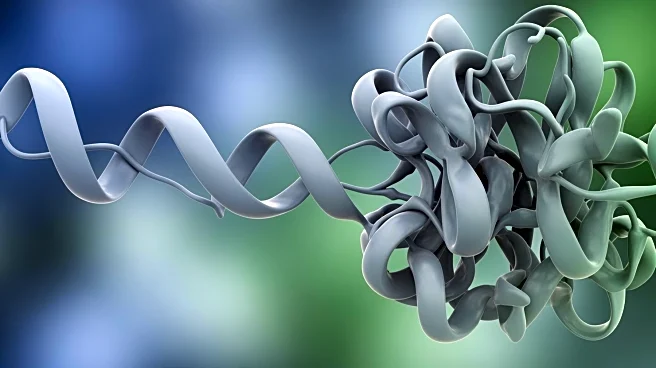




Protein folding is a fascinating and complex process that transforms a linear chain of amino acids into a functional three-dimensional structure. This transformation is crucial for proteins to perform their biological roles effectively. Understanding protein folding is essential for grasping how proteins function and how misfolding can lead to diseases. This article delves into the intricate process of protein folding, highlighting the stages and forces
involved in achieving the native state.
The Initial Stages of Protein Folding
Protein folding begins as soon as the polypeptide chain is synthesized by the ribosome. This process can occur co-translationally, meaning the nascent chain starts to fold while the rest of the polypeptide is still being synthesized. The primary structure, or the sequence of amino acids, dictates the folding pathway and the final structure of the protein. The sequence contains all the information necessary for the protein to reach its native state, a concept known as Anfinsen's dogma.
The initial folding involves the formation of secondary structures, such as alpha helices and beta sheets. These structures are stabilized by hydrogen bonds and are crucial for the protein's stability. The alpha helix forms a spiral shape, while beta sheets consist of backbone bending over itself to form hydrogen bonds. These secondary structures are the first step towards the protein's final three-dimensional conformation.
Forces Driving Protein Folding
Several forces drive the protein folding process, ensuring that the protein reaches its native state. Hydrophobic interactions play a significant role, as hydrophobic side chains collapse into the core of the protein, away from the aqueous environment. This hydrophobic effect is a major driving force behind folding, contributing to the protein's stability.
In addition to hydrophobic interactions, intramolecular hydrogen bonds, van der Waals forces, and Coulomb interactions also guide the folding process. These forces work together to minimize the free energy of the protein, leading to a stable and functional structure. The folding funnel model visualizes this process, showing how proteins navigate through various conformations to reach the lowest energy state.
The Role of Chaperones and Folding Catalysts
Chaperone proteins assist in the folding process, ensuring that proteins fold correctly and efficiently. They stabilize unstable structures and prevent incorrect folding conformations. Chaperones do not contain information about the native structure but help guide the protein towards it by reducing unwanted aggregations.
Folding catalysts, such as protein disulfide isomerases and peptidyl-prolyl isomerases, also play a role in protein folding. These catalysts facilitate slow steps in the folding pathway, such as the formation of disulfide bonds or the interconversion between cis and trans stereoisomers. Together, chaperones and folding catalysts ensure that proteins fold correctly, maintaining their biological relevance and functionality.