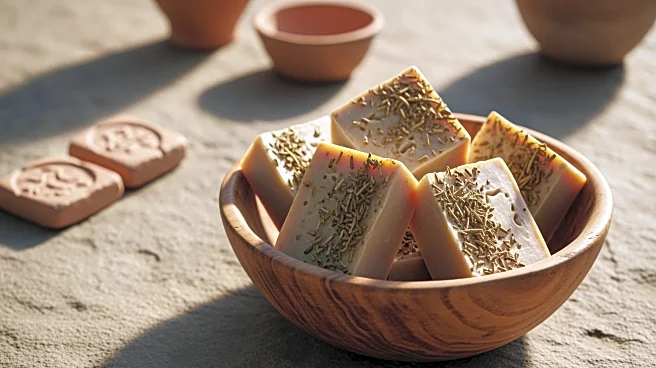




Soap has been an essential part of human life for thousands of years, evolving from a simple cleaning agent to a complex product with various applications. Its history is rich and varied, beginning in ancient Babylon and continuing through the ages to become a staple in households worldwide. This article traces the historical journey of soap, highlighting key developments and changes in its production and use.
Ancient Beginnings
The earliest recorded evidence of soap-like
materials dates back to ancient Babylon around 2800 BC. These early soaps were made by mixing fats and oils with a base, a method that laid the foundation for soap production for centuries. Soap was used primarily for washing and bathing, essential practices for maintaining hygiene in ancient societies.
In ancient Egypt, soap-like products were used not only for cleansing but also as medicinal remedies. The Ebers papyrus from 1550 BC describes the use of animal fats and vegetable oils combined with soda ash to create a soap-like substance. This highlights the dual role of soap in ancient cultures as both a cleanser and a therapeutic agent.
The Middle Ages and Renaissance
During the Middle Ages, soap production became more refined, with the use of olive oil replacing animal fats in many regions. This change led to the development of milder soaps, which were more pleasant to use. Soap-making became a significant industry in Europe, particularly in regions with abundant olive oil supplies.
By the Renaissance, soap was considered a luxury item, often perfumed and used by the wealthy. The production of soap on an industrial scale began in cities like Marseille and Venice, where soap-makers developed techniques that improved the quality and consistency of their products.
Modern Developments
The Industrial Revolution brought significant changes to soap production, making it more accessible to the general public. Advances in chemistry allowed for the creation of synthetic detergents, which complemented traditional soap products. These developments expanded the uses of soap beyond personal hygiene to include cleaning and industrial applications.
Today, soap is a ubiquitous product, available in various forms such as bars, liquids, and powders. It is used not only for personal care but also in industries ranging from food processing to pharmaceuticals. The evolution of soap reflects broader changes in technology and society, illustrating how a simple product can adapt and thrive over time.