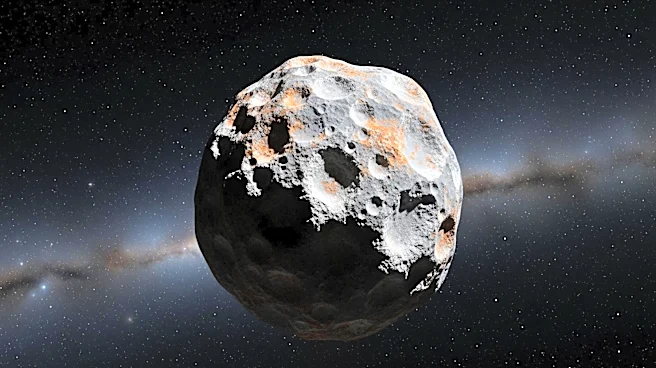





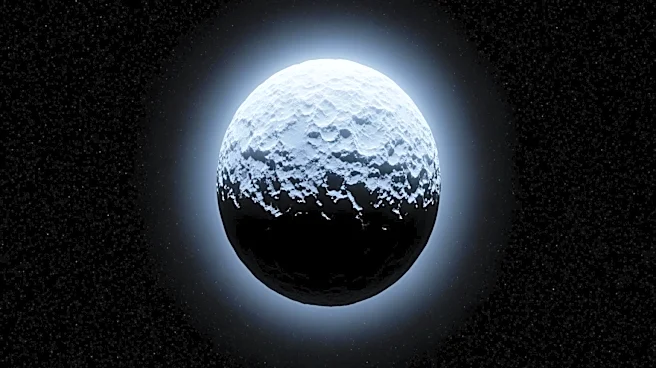
3 Juno is a prominent member of the asteroid belt, a region of space filled with rocky bodies orbiting the Sun between Mars and Jupiter. As one of the largest stony asteroids, 3 Juno plays a significant role in our understanding of this celestial neighborhood. This article examines the importance of 3 Juno within the asteroid belt and its contributions to the field of astronomy.
Significance in the Asteroid Belt
3 Juno is one of the largest asteroids in the asteroid belt, tied with
three others as the thirteenth largest. It is estimated to contain about 1% of the total mass of the asteroid belt, highlighting its substantial presence among the myriad smaller bodies. Along with 15 Eunomia, Juno is one of the two largest S-type asteroids, characterized by their stony composition.
The asteroid belt itself is a region of great interest to astronomers, as it holds clues to the early solar system's formation and evolution. 3 Juno's size and composition make it a valuable subject for study, offering insights into the materials and processes that shaped the solar system billions of years ago.
Observational Milestones
3 Juno has been the focus of numerous observational studies since its discovery. It was the first asteroid for which an occultation was observed, passing in front of a dim star in 1958. This event marked a significant milestone in the study of asteroids, as it allowed astronomers to gather data on Juno's size and shape.
Over the years, several occultations by Juno have been observed, providing valuable information about its dimensions and surface features. These observations have helped refine our understanding of Juno's physical characteristics and its place within the asteroid belt.
Contributions to Astronomy
The study of 3 Juno has contributed to the broader field of astronomy in several ways. Its unique characteristics, such as its eccentric orbit and high reflectivity, have provided opportunities to test and refine astronomical theories and models. Juno's role in the asteroid belt also offers insights into the distribution and composition of materials in this region.
As technology advances, the study of 3 Juno and other asteroids continues to evolve. Future missions and observations may uncover new details about Juno's composition and history, further enhancing our understanding of the asteroid belt and its significance within the solar system. Through its contributions to astronomy, 3 Juno remains a key player in the ongoing exploration of our cosmic neighborhood.