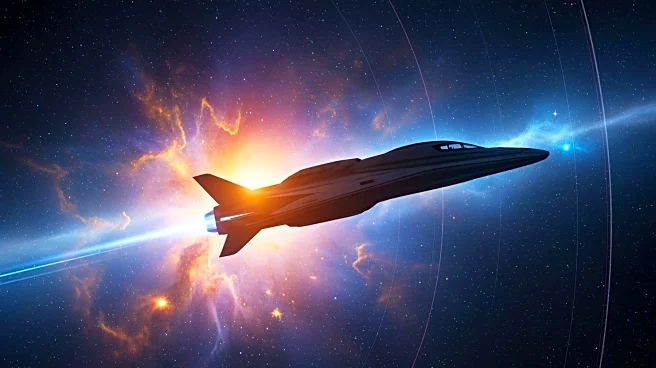



The AS-103 mission, launched in 1965, embarked on a remarkable journey through space and time. As the third orbital flight test of a boilerplate Apollo spacecraft, AS-103 was not only a test of spacecraft systems but also a demonstration of endurance in space. The mission lasted over three years, with the Pegasus satellite remaining in orbit until 1985, showcasing the durability and longevity of space missions.
Launch and Initial Orbit
The AS-103 mission began on February
16, 1965, with its launch from Cape Kennedy Launch Complex 37B. Despite initial delays due to a power failure, the launch proceeded successfully, and the spacecraft was inserted into orbit approximately 10.5 minutes later. The Pegasus satellite, enclosed within the service module, was attached to the S-IV stage, marking the beginning of its long journey in space.
The orbital configuration consisted of the satellite mounted on the adapter, which remained attached to the instrument unit and the expended S-IV stage. The perigee was 307.8 miles, and the apogee was 461.9 miles, with an orbital inclination of 31.76 degrees. This precise insertion into orbit was crucial for the mission's success and the satellite's long-term presence in space.
Mission Duration and Achievements
The AS-103 mission lasted three years, six months, and thirteen days, with the Pegasus satellite completing approximately 75,918 orbits. During this time, the satellite traveled over 3 billion kilometers, collecting valuable data on micrometeoroid environments in near-Earth orbit.
The predicted useful lifetime of Pegasus A in orbit was 1188 days, and the satellite was decommissioned on August 29, 1968. Despite minor malfunctions, the mission was deemed a success, meeting all its objectives and providing insights into the durability and longevity of space missions.
Legacy and Long-term Impact
The AS-103 mission's legacy extends beyond its initial objectives, influencing future space missions and spacecraft design. The data collected from the Pegasus satellite contributed to the understanding of micrometeoroid environments, paving the way for advancements in space exploration.
The mission's long-term presence in orbit demonstrated the viability of using boilerplate spacecraft for testing and highlighted the importance of endurance in space missions. AS-103's journey through space and time continues to inspire future generations of space explorers, emphasizing the significance of durability and longevity in advancing space exploration.