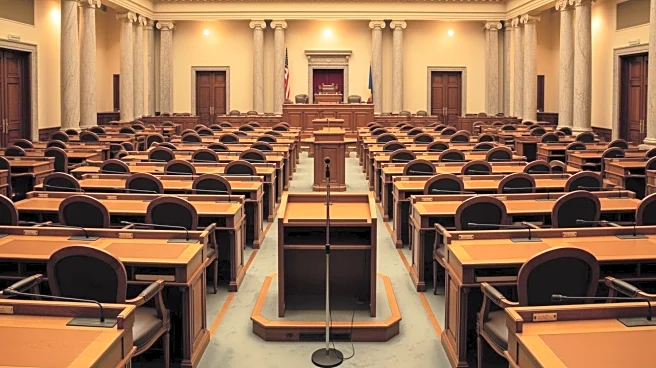

The United States Congress is a pivotal component of the federal government, responsible for crafting and enacting legislation. Comprised of two houses, the Senate and the House of Representatives, Congress operates
under a bicameral system. This structure is designed to balance representation and ensure thorough debate on legislative matters. Understanding the organization and function of Congress is essential to grasping how laws are made and how the U.S. government operates.
The Bicameral System
The U.S. Congress is divided into two distinct chambers: the Senate and the House of Representatives. This bicameral system, derived from the Latin words for "two chambers," is intended to provide a balance of power and representation. The House of Representatives consists of 435 members, with representation based on the population of each state. This means states with larger populations have more representatives, ensuring that the interests of more populous areas are adequately represented.
In contrast, the Senate is composed of 100 members, with each state having two senators regardless of its population size. This equal representation in the Senate ensures that smaller states have a voice in the legislative process, preventing larger states from dominating the federal government. The combination of these two chambers allows for a comprehensive approach to lawmaking, where both population-based and equal state representation are considered.
Legislative Process
The primary function of Congress is to create, debate, and pass legislation. For a bill to become law, it must be approved by both the House of Representatives and the Senate. This process begins with the introduction of a bill, which is then assigned to a committee for detailed examination. Committees play a crucial role in shaping legislation, as they review, amend, and decide whether a bill should proceed to the full chamber for a vote.
Once a bill passes through committee, it is debated on the floor of the respective chamber. Members of Congress discuss the merits and drawbacks of the proposed legislation, and amendments may be made. For a bill to advance, it must receive a majority vote in both the House and the Senate. If both chambers pass the same version of the bill, it is sent to the President for approval.
Checks and Balances
The U.S. Congress operates within a system of checks and balances, designed to prevent any one branch of government from becoming too powerful. After Congress passes a bill, the President has the authority to sign it into law or veto it. If the President vetoes a bill, Congress can override the veto with a two-thirds majority vote in both chambers, demonstrating the balance of power between the legislative and executive branches.
Additionally, Congress has the power to impeach federal officials, including the President, for "Treason, Bribery, or other high Crimes and Misdemeanors." This power serves as a critical check on the executive branch, ensuring accountability and adherence to the law. Through its bicameral structure and legislative process, Congress plays a vital role in maintaining the balance of power within the U.S. government.