
Alfred Worden, an American astronaut, played a pivotal role in the Apollo 15 mission, one of NASA's most scientifically ambitious lunar explorations. As the command module pilot, Worden's contributions
were crucial to the mission's success, and his work in space has left a lasting impact on the field of space exploration. From his early life to his groundbreaking achievements in space, Worden's story is one of dedication, innovation, and a passion for discovery.
Early Career and Path to NASA
Alfred Worden was born on February 7, 1932, in Jackson, Michigan. His early life on a farm instilled in him a strong work ethic and a desire to pursue higher education. After graduating from Jackson High School, Worden attended the United States Military Academy at West Point, where he excelled in academics and athletics. He graduated in 1955 with a Bachelor of Science degree in military science and chose to be commissioned in the United States Air Force.
Worden's career in the Air Force saw him develop a passion for flying, despite having no prior piloting experience. He quickly honed his skills as a fighter pilot and later pursued further education in aerospace engineering at the University of Michigan, earning two master's degrees in 1963. His expertise and dedication led to his selection as part of NASA's Group 5 astronauts in 1966, setting the stage for his future role in the Apollo program.
Role in Apollo 15
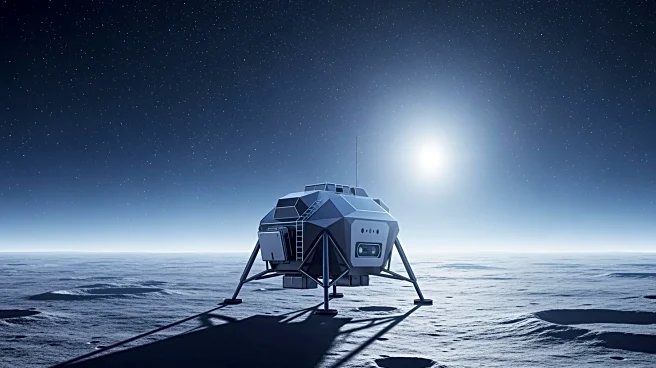
Apollo 15, launched in 1971, was a landmark mission in lunar exploration, and Worden's role as the command module pilot was critical to its success. While his crewmates, David Scott and James Irwin, explored the lunar surface, Worden remained in lunar orbit aboard the command module Endeavour. His responsibilities included operating the scientific instrument module (SIM) bay, which housed a suite of instruments designed to collect data on the Moon and its environment.
Worden's work in the SIM bay was groundbreaking. He conducted extensive photography and operated instruments such as the gamma-ray spectrometer, X-ray spectrometer, and mapping camera. These efforts provided valuable data that enhanced our understanding of the Moon's geology and composition. Additionally, Worden performed the first deep-space extravehicular activity (EVA), retrieving film cassettes from the spacecraft's exterior. This EVA, conducted at a great distance from any planetary body, remains a significant achievement in the history of space exploration.
Legacy and Impact
Alfred Worden's contributions to space exploration extend beyond his role in Apollo 15. After retiring from NASA in 1975, he remained active in promoting space exploration and education. He served as chair of the Astronaut Scholarship Foundation's board of directors from 2005 to 2011, advocating for the importance of science and technology education.
Worden's legacy is marked by his dedication to advancing human knowledge and inspiring future generations. His work in space provided valuable insights into the Moon's geology, influencing subsequent lunar missions and research. Worden's achievements have been recognized with numerous awards, including the NASA Distinguished Service Medal and induction into the International Space Hall of Fame.
In conclusion, Alfred Worden's unique contributions to space exploration have left an indelible mark on the field. His work in the Apollo 15 mission, particularly his groundbreaking EVA and scientific research, has advanced our understanding of the Moon and set a high standard for future exploration. Worden's legacy continues to inspire those who dream of venturing beyond our planet, reminding us of the power of curiosity and the importance of pushing the boundaries of human knowledge.