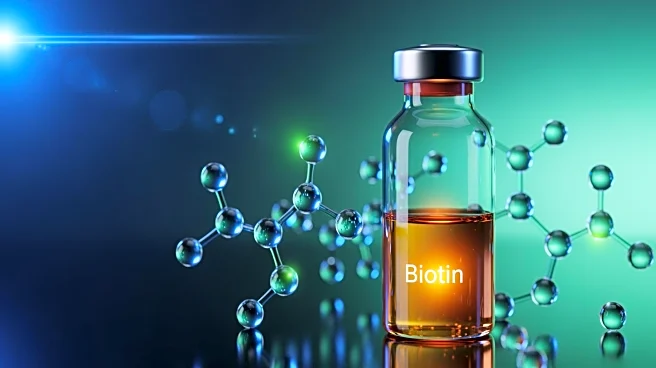

Biotin, a versatile vitamin, has found numerous applications in the field of biotechnology. Its strong binding affinity with proteins like avidin and streptavidin makes it a valuable tool for various biochemical
assays and processes. This article explores the innovative uses of biotin in biotechnology and its impact on scientific research.
Biotinylation and Its Applications
Biotinylation is the process of covalently attaching biotin to proteins, nucleic acids, or other molecules. This modification is rapid and specific, allowing for the isolation and study of biotinylated molecules. The strong binding between biotin and proteins like streptavidin is resistant to heat, pH changes, and proteolysis, making it ideal for use in diverse environments.
In biotechnology, biotinylation is used in affinity chromatography to purify proteins. By immobilizing avidin or streptavidin on a column, biotinylated proteins can be separated from complex mixtures. This technique is crucial for studying protein-protein interactions and post-translational modifications, such as ubiquitylation.
Detection and Analysis
Biotin's strong binding properties also make it useful for detection and analysis. Biotinylated proteins can be detected using enzyme-linked assays, where avidin or streptavidin is conjugated to enzymes like horseradish peroxidase. This allows for the visualization and quantification of proteins in various assays, including ELISA and western blotting.
Additionally, biotinylation is employed in the study of cell surface proteins. By using biotinylation reagents that do not penetrate cell membranes, researchers can selectively label and study proteins on the cell surface. This application is valuable for understanding cell signaling and communication.
Innovations and Future Directions
Recent innovations in biotin technology include the development of photoactivatable biotinylation reagents. These reagents allow for the non-specific labeling of proteins and nucleic acids, providing flexibility in experimental design. By activating biotinylation with light, researchers can control the timing and location of labeling, enhancing the precision of their studies.
The use of biotin in biotechnology continues to expand, with new applications emerging in areas such as drug delivery and diagnostics. As researchers develop more sophisticated biotinylation techniques, the potential for biotin to contribute to scientific advancements grows.
In conclusion, biotin's unique properties make it an indispensable tool in biotechnology. Its applications in purification, detection, and analysis have revolutionized research methodologies, paving the way for new discoveries and innovations in the field.