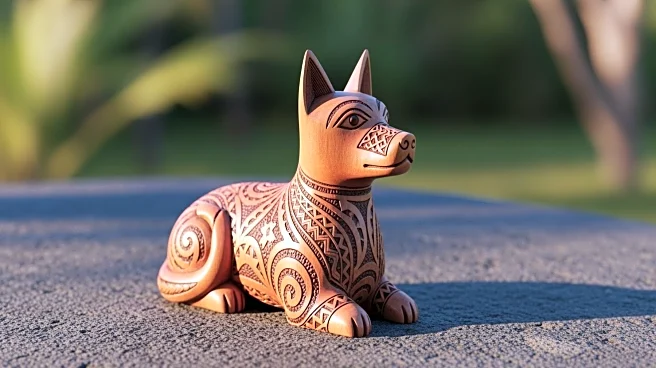




The Tahitian Dog, known as the 'Ūrī Mā’ohi in the Tahitian language, was an extinct breed native to Tahiti and the Society Islands. This breed was an integral part of traditional Tahitian society, serving both as a food source and a cultural symbol. Despite its importance, the Tahitian Dog became extinct following the arrival of European settlers. This article delves into the historical significance of the Tahitian Dog, its role in Polynesian culture,
and the factors leading to its extinction.
Historical Significance
The Tahitian Dog was introduced to Tahiti and the Society Islands by the ancestors of the Tahitian people during their migrations to Polynesia. These dogs were closely related to other Polynesian breeds, such as the Hawaiian Poi Dog and the New Zealand Kurī. The introduction of these dogs was part of a broader movement of people and animals across the Pacific, which included pigs and chickens. Genetic studies suggest that these dogs likely originated from Indonesian dogs, indicating a shared ancestry among Polynesian breeds.
In traditional Tahitian society, the Tahitian Dog was more than just a companion animal. It was a vital part of the local diet, often served during feasts and to high-ranking chiefs. The dogs were raised on a vegetarian diet, which included breadfruits, coconuts, and yams. This diet contributed to their small stature and unique physical characteristics, such as broad heads and smooth coats.
Cultural Role and Characteristics
The Tahitian Dog was not only a food source but also played a role in the cultural practices of the Tahitian people. Dog teeth were used to make fishhooks, and their bones were fashioned into tools and weapons. The long tail hairs of certain dog varieties were used to decorate traditional ornaments worn by priests and chiefs. These practices highlight the multifaceted role of the Tahitian Dog in society.
Physically, the Tahitian Dog was described as having a small to medium build, resembling terriers or dachshunds. They had broad heads, small eyes, and erect ears. Despite their physical attributes, they were known for their lazy and shy demeanor, seldom barking but occasionally howling.
Extinction and Legacy
The extinction of the Tahitian Dog was primarily due to the introduction of European dog breeds, which led to interbreeding and the eventual disappearance of the pure Tahitian Dog. By the early 19th century, the breed had become extinct or merged into mongrel breeds. European explorers, such as Captain James Cook, documented the existence of these dogs and even tasted their meat, noting its delicacy.
The legacy of the Tahitian Dog lives on through historical accounts and archaeological findings. While the breed itself is no longer present, its impact on Polynesian culture and history remains significant. The story of the Tahitian Dog serves as a reminder of the complex interactions between humans and animals in shaping cultural identities.