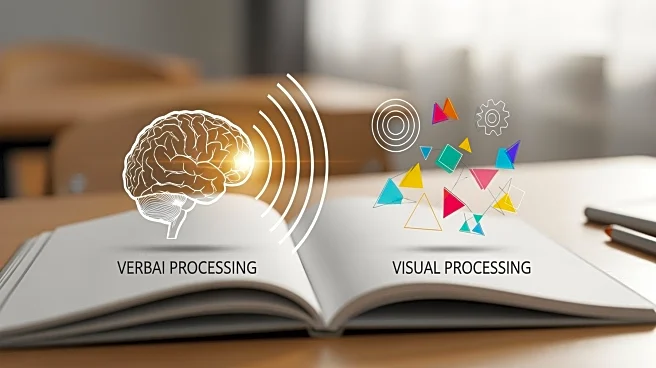




Dual-coding theory, introduced by Allan Paivio, has had a profound impact on educational practices and learning strategies. By understanding how the brain processes verbal and nonverbal information, educators can develop more effective teaching methods that cater to the diverse needs of learners. This article explores the influence of dual-coding theory on education and how it can be applied to enhance learning outcomes.
Enhancing Learning with Visual Aids
One of the key applications
of dual-coding theory in education is the use of visual aids to complement verbal instruction. Visual aids, such as diagrams, charts, and images, can help students better understand and retain complex information. By engaging both the verbal and nonverbal systems, educators can create a more immersive learning experience that facilitates deeper comprehension.
For example, in subjects like biology, where students need to understand intricate processes, visual aids can provide a clear representation of concepts that might be difficult to grasp through words alone. This dual representation not only aids in understanding but also improves memory retention, as students can recall both the verbal explanation and the visual image associated with the concept.
Multimedia Learning and Dual-Coding
The rise of technology in education has further expanded the applications of dual-coding theory through multimedia learning. Multimedia presentations, which combine text, audio, and visuals, engage multiple cognitive channels, making them an effective tool for teaching. Research has shown that students who learn through multimedia are more likely to retain information compared to those who receive traditional verbal instruction.
Multimedia learning leverages the strengths of both verbal and nonverbal processing, allowing students to form a more comprehensive understanding of the material. This approach is particularly beneficial for visual learners, who may struggle with purely verbal instruction. By incorporating multimedia elements, educators can cater to different learning styles and improve overall educational outcomes.
Addressing the Challenges
While dual-coding theory offers numerous benefits, it also presents challenges that educators must address. One challenge is ensuring that the verbal and nonverbal elements are effectively integrated. If the visual aids do not align with the verbal content, they may confuse rather than clarify the material. Educators must carefully design their instructional materials to ensure coherence and consistency between the two channels.
Additionally, not all subjects lend themselves equally to dual-coding strategies. In areas where visual representation is less applicable, such as abstract mathematics, educators may need to find creative ways to incorporate nonverbal elements. Despite these challenges, the principles of dual-coding theory remain a valuable guide for developing effective educational practices.
In conclusion, dual-coding theory has significantly influenced the field of education by highlighting the importance of using both verbal and nonverbal channels in teaching. By incorporating visual aids and multimedia elements, educators can enhance learning experiences and improve student outcomes. As educational research continues to evolve, dual-coding theory will remain a critical tool for understanding and optimizing the learning process.