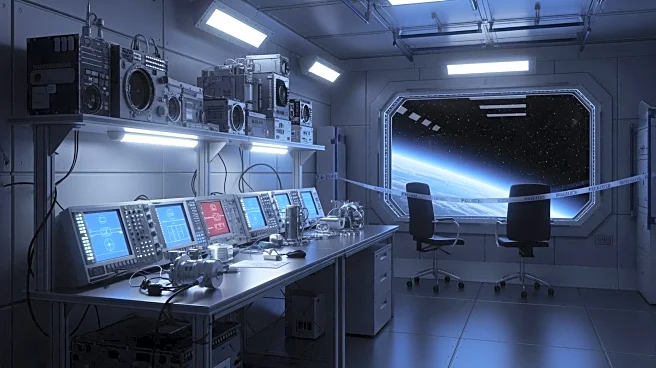




The International Space Station (ISS) serves as a unique platform for scientific research, offering a microgravity environment that cannot be replicated on Earth. Since its inception, the ISS has hosted a wide array of experiments across various fields, contributing significantly to our understanding of space and its effects on different materials and biological systems.
A Hub for Diverse Scientific Fields
The ISS supports research in numerous scientific disciplines, including astrobiology,
astronomy, physical sciences, materials science, space weather, meteorology, and human research. The station's microgravity environment allows scientists to conduct experiments that would be impossible on Earth, providing valuable insights into fundamental scientific questions.
One of the most notable experiments on the ISS is the Alpha Magnetic Spectrometer (AMS), which aims to detect dark matter and answer other fundamental questions about the universe. The AMS is considered as important as the Hubble Space Telescope, and its findings have already hinted at the presence of dark matter. This experiment exemplifies the kind of groundbreaking research that the ISS facilitates.
Human Health and Space Medicine
The ISS also plays a crucial role in advancing our understanding of human health in space. Medical research conducted on the station focuses on the effects of long-term space exposure on the human body, including muscle atrophy, bone loss, and fluid shift. These studies are essential for determining the feasibility of long-duration human spaceflight and space colonization.
One significant study is the Advanced Diagnostic Ultrasound in Microgravity, which explores the use of ultrasound scans for diagnosing and treating medical conditions in space. This research has potential applications on Earth, particularly in emergency and rural care situations where access to trained physicians is limited.
The Future of ISS Research
As the ISS continues to operate, plans are in place to expand its research capabilities. Future additions, such as Axiom Space's Payload Power Thermal Module, will enhance the station's ability to support scientific experiments. The ISS is expected to remain operational until 2030, providing a platform for ongoing research and discovery.
The scientific research conducted on the ISS has far-reaching implications, not only for space exploration but also for life on Earth. The knowledge gained from these experiments contributes to advancements in technology, medicine, and our understanding of the universe. As the ISS continues to host groundbreaking research, it remains a vital asset for the global scientific community.